Why Funded Traders Burn Out and How to Prevent It
Why funded traders burnout—pressure, perfectionism and isolation—and practical prevention: schedules, limits, process goals, breaks and community support.

Trading in a funded program can be mentally and emotionally draining. The constant pressure to meet strict rules, the isolation of remote work, and the emotional toll of tying self-worth to results are common reasons traders burn out. Here's what you need to know:
Key Causes of Burnout:
- Strict Rules: Daily loss limits and realistic profit targets create high stress.
- Emotional Exhaustion: Linking trading performance to personal value leads to anxiety.
- Isolation: Remote trading often lacks support systems.
How to Prevent Burnout:
- Focus on Process Goals: Prioritize discipline over profits.
- Set Limits: Cap daily trades and stick to loss thresholds.
- Take Breaks: Regular breaks and structured schedules help maintain focus.
- Build Support Systems: Join trading communities to share experiences.
Burnout isn't inevitable. By managing stress, creating balance, and staying disciplined, you can protect your mental health and trading career.
Main Causes of Burnout in Funded Trading
Performance Pressure and Unrealistic Goals
Funded trading programs are relentless in their oversight. Every decision is scrutinized under strict rules - daily loss limits, drawdown thresholds, and profit targets. A single misstep can end your account, creating a constant sense of pressure. This environment fosters decision fatigue, as the mental energy required for repeated high-stakes choices gradually depletes your focus and clarity.
The pressure only grows when traders set unrealistic timelines for success. The drive to climb funding tiers quickly or hit profit targets often leads to forced trades and overtrading. Instead of sticking to well-defined strategies, traders chase setups that don’t align with their criteria. Even when trading simulated capital, the stress can feel as real as trading your own money.
This relentless environment creates a perfect storm for emotional and mental strain.
Emotional Exhaustion from Tying Self-Worth to Results
The technical demands of trading with a funded account are only part of the story. Emotional exhaustion often stems from tying personal worth to trading results. For many, a profitable day feels like validation, while a losing day feels like personal failure. This emotional rollercoaster, where your mood depends on each trade’s outcome, can lead to chronic anxiety.
Research shows that financial losses are felt twice as intensely as equivalent gains. Instead of treating losses as part of the process, traders often internalize them, seeing losses as evidence of their inadequacy.
"Burnout makes you believe you're a bad trader when, in fact, you're simply exhausted." - Earn2Trade
This mindset worsens when every trade feels like a defining moment. Experienced traders know success is measured over hundreds of trades, not single outcomes. But burnout clouds this perspective, making every setback feel monumental and causing traders to question their abilities and purpose.
Isolation and Limited Support Systems
Adding to the pressure and emotional toll is the isolation that often comes with trading. Working from home might sound appealing, but it can quickly become a source of stress. Without colleagues to share experiences or mentors to offer guidance, challenges can feel insurmountable.
The numbers are telling: 19% of prop traders cite a lack of support services as a major hurdle, and 98% of traders who pass their initial challenges leave the program within six months, with emotional burnout frequently to blame.
Isolation strips away the emotional support needed to cope with trading’s ups and downs. Without a network to normalize these experiences, traders can feel like their struggles are unique and overwhelming.
"Trading in isolation is a silent killer." - Earn2Trade
Neglecting relationships outside of trading - whether with family, friends, or hobbies - only exacerbates the problem. The intense focus trading demands requires balance. Without it, isolation can trap traders in a cycle where market charts dominate their lives, leaving little room for recovery or perspective.
How to Identify Burnout Warning Signs
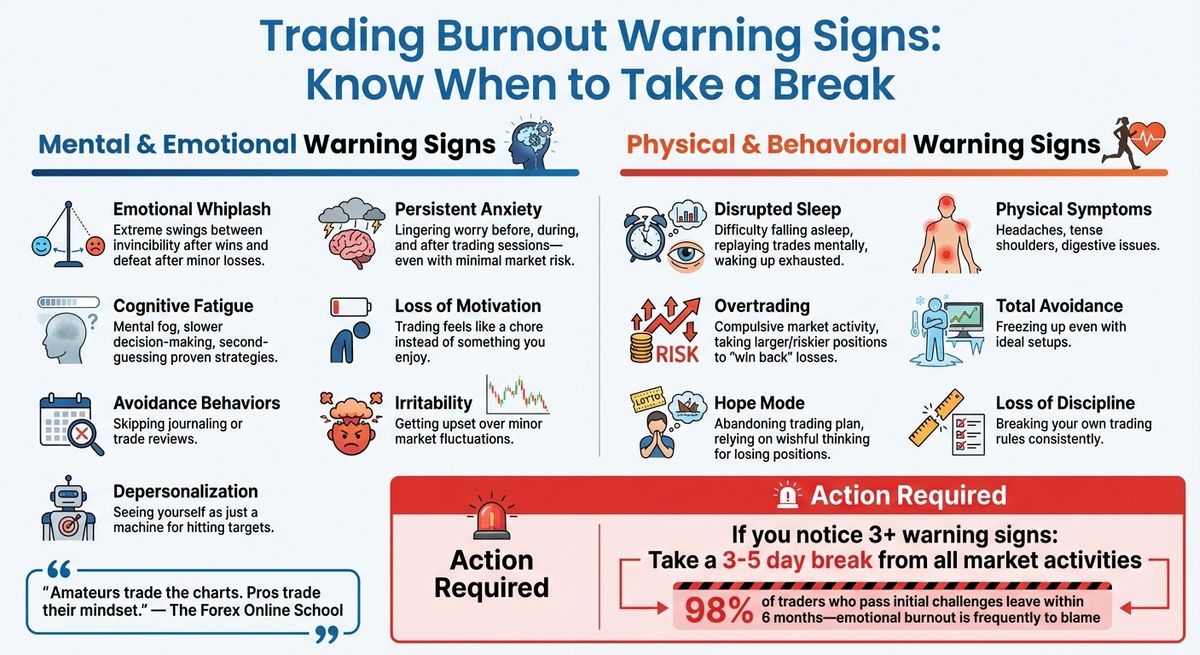
Burnout doesn't hit like a lightning bolt - it sneaks up on you. It often goes unnoticed until your performance takes a nosedive, which can lead to common trading mistakes and financial setbacks. Spotting the early signs is critical to avoid these pitfalls.
Mental and Emotional Warning Signs
Before your trading account reflects trouble, your mind often sends out distress signals. One of the most telling signs is emotional whiplash - those swings between feeling invincible after a win and utterly defeated by a minor loss. This goes beyond the usual ups and downs of trading; it’s a red flag that your emotional energy is running on fumes.
Another key indicator is persistent anxiety, which can linger before, during, and even after trading sessions - sometimes even when the market risk is minimal. You might also experience cognitive fatigue, which shows up as mental fog, slower decision-making, and second-guessing strategies that once felt second nature.
"Amateurs trade the charts. Pros trade their mindset." - The Forex Online School
Burnout can also sap your motivation, turning trading from something you love into a chore. You might start to avoid essential tasks like journaling your trades. Other warning signs include irritability over minor market fluctuations and depersonalization, where you start to see yourself as nothing more than a machine for hitting targets, losing sight of your broader identity. If you find yourself questioning whether you still enjoy trading or notice that emotions are driving your decisions instead of your trading plan, it could be the start of burnout.
These mental warning signs are often followed by physical and behavioral changes.
Physical and Behavioral Warning Signs
Your body often knows you're burned out before your mind fully catches on. Disrupted sleep patterns are a common clue - whether it’s struggling to fall asleep because you’re replaying trades in your head or waking up exhausted despite a full night’s rest. Physical symptoms like headaches, tense shoulders, or digestive issues can also signal that something’s off.
Burnout also shows up in your behavior. Some traders respond with overtrading, feeling compelled to stay active in the markets, often trying to "win back" losses by taking larger, riskier positions. Others swing to the opposite extreme, experiencing total avoidance, where even the most ideal setups leave them frozen with hesitation. A particularly dangerous sign is slipping into "hope mode", where you abandon your trading plan and start relying on wishful thinking that a losing position will somehow turn around. This loss of discipline is a clear signal that burnout is taking over.
Failing to address these warning signs can lead to severe consequences, like blowing through daily loss limits, losing access to funded programs, or even derailing your trading career entirely. Catching these symptoms early gives you the chance to hit pause and take a much-needed break - three to five days off can often restore your focus and discipline before the damage becomes irreversible.
How to Prevent Burnout in Funded Trading
Burnout often stems from specific habits and mindsets that can derail even the most promising trading careers. Let’s explore some strategies to tackle these issues before they take a toll.
Focus on Process Goals, Not Just Profit Targets
Your daily focus shouldn’t revolve solely around your profit and loss (P&L). Instead, center your attention on process-oriented goals like following your trading plan. For instance, aim to "execute only high-quality setups" or "limit risk to 1% per trade." These goals are entirely within your control, unlike profit outcomes, which are often influenced by unpredictable market conditions. Shifting focus this way reduces the pressure that can lead to emotional exhaustion.
Rather than obsessing over profits, evaluate whether you stuck to your plan and managed risk effectively. Research shows that losses often feel twice as painful as gains of the same size, making it essential to separate your self-worth from daily trading results.
"Trading is a business of making good decisions. The money is a byproduct." FunderPro
To maintain discipline, consider setting a daily trade limit of 3–5 trades. This approach encourages selectivity and prioritizes quality over quantity. As Earn2Trade, a company that has helped over 600 traders achieve funded status in 2024, advises:
"It's not the hours you put in. It's what you put into the hours." Earn2Trade
Once your goals are clear, the next step is to structure your trading day to avoid burnout.
Create a Fixed Trading Schedule
Trading around the clock is a recipe for burnout. Instead, align your schedule with periods of peak market activity and your personal energy levels. For example, the London session (8:00 AM–4:00 PM GMT) and the New York session (1:00 PM–9:00 PM GMT) are known for high liquidity and clean price action. Day traders should limit active trading to 2–3 hours per day, or a maximum of 4 focused hours, to maintain decision-making quality.
Work in 90-minute focus blocks, taking a 10–15 minute break between sessions to reset your mind. This rhythm aligns with your body’s natural cycles and helps prevent mental fatigue. Set a firm cut-off time, such as 9:00 PM, to avoid the temptation of revenge trading late at night.
Avoid trading during low-volume periods when price action becomes less predictable. Make time for pre-trade preparation, like reviewing market conditions and key news events, as well as post-trade reviews, including journaling your emotional state. Also, dedicate at least one day a week to completely disconnect from market information to recharge your mental energy.
"Professionals stick to the schedule; amateurs let life get in the way." James Clear
Build Mental Reset Habits
Just as your trading account needs safeguards, so does your mind. Start your day with a pre-session ritual, like 3–5 minutes of deep breathing or gratitude journaling, to prepare for the challenges ahead. Before placing any trade, take 60 seconds to center yourself: acknowledge any tension, name your emotion (e.g., "FOMO"), and clearly state your trade intention. If emotions are driving your decision, pause before acting.
During your focus blocks, take screen-free breaks to walk, stretch, or hydrate. These short resets can help maintain clarity and energy. At the end of your trading day, stick to a set cut-off time and spend a few minutes journaling about your emotional state rather than just your P&L. This practice helps you detach self-worth from market outcomes.
If trading starts to feel draining or you find yourself breaking your rules repeatedly, consider taking a 3–5 day break from all market-related activities. This isn’t a sign of failure - it’s a proactive way to reset before burnout takes hold.
"Under pressure, you don't rise to the occasion - you sink to the level of your training." Navy SEALs
A clear mind works best when supported by a strong network, which brings us to the importance of community.
Connect with Trading Communities
Trading from home can feel isolating, and without colleagues to share the ups and downs, stress can quietly build. Joining groups like For Traders’ Discord gives you a space to share experiences, seek advice, and remind yourself that you’re not alone. Talking through a tough day with someone who understands the unique pressures of trading can be a powerful way to combat burnout.
Set Daily Trading Limits and Stop-Loss Rules
Limiting your trades to 3–5 per day and adhering to a daily loss cap (e.g., 2% of your account) can help prevent emotional decision-making. If you hit your loss limit, step away from trading for 16–24 hours to reset your mindset and avoid revenge trading.
Using tools like bracket orders or automated alerts can also reduce the risk of poor decisions when emotions are running high. The key isn’t to trade more but to trade smarter, conserving your mental energy for the best opportunities.
"It's not whether you're right or wrong that matters - it's how much money you make when you're right and how much you lose when you're wrong." George Soros
Ready to trade funded capital?
Choose your path — Instant Accounts, One-Step or Two-Step Challenges — from just $23, with up to $300,000 in funded capital.
Choose your challengeHow to Recover from Burnout
Recovering from burnout is essential for maintaining a sustainable trading career and keeping up the practices that support long-term success.
Accept the Situation and Take a Break
Burnout isn’t a personal failure - it’s a sign that your system has been pushed too hard. Think of it as a capacity issue. To recover, step away from the markets for 3–5 days. This time off is not about quitting; it’s about ensuring you can continue trading effectively in the future.
During this break, resist the urge to check charts or follow market news. Your brain needs a full reset from the constant decision-making and stress that led to burnout. Instead, focus on activities that recharge you - spend time with loved ones, get some exercise, or simply catch up on sleep.
"Where you want to be is always in control, never wishing, always trading, and always, first and foremost, protecting your butt." Paul Tudor Jones, Hedge Fund Manager
After your break, ease back into trading with a more measured approach to rebuild your rhythm.
Start Small When You Return
When you’re ready to trade again, start with smaller, less ambitious goals. For example, cut your per-trade risk in half - if you usually risk $500 per trade, scale it down to $250 for the first 10–15 trades. This helps you regain confidence while staying cautious.
Limit yourself to 1–2 high-quality setups each day to focus on precision and discipline. Use a pre-trade checklist to confirm that each trade aligns with your strategy, offers a 2:1 risk-to-reward ratio, and that you’re in the right emotional state to execute. If you hit three consecutive losses, take a step back - pause trading for at least 24 hours to reset.
Prioritize Steady Progress Over Quick Wins
Shift your focus to process-based goals instead of chasing rapid profits. These goals, like following your entry rules for the next 10 days or sticking to your daily trade limit, can reduce the pressure of outcome-focused targets like "making $2,000 this week". This approach not only supports recovery but also builds a foundation for long-term success.
Trading is a long game. As Warren Buffett wisely said, "The most important quality for an investor is temperament, not intellect". Treat losses as part of the process - a business expense or a learning opportunity - not as a personal failure. What truly matters is consistent execution of your plan, not any single winning trade or day.
Building Long-Term Trading Habits
Recovering from burnout is only the beginning. While short-term fixes can help you regain your footing, achieving consistent success in trading requires building habits that stand the test of time. Trading is more like a marathon than a sprint - it demands steady, sustainable practices rather than bursts of effort.
Maintain Balance Between Trading and Personal Life
Setting clear boundaries is essential to prevent trading from taking over your life. Stick to defined trading hours, such as 8:30–11:30 AM CST, and then step away from your platform. This separation ensures that trading doesn’t spill into your personal time. Having a dedicated workspace can also help - keep trading out of spaces like your bedroom or kitchen to avoid constant reminders of the markets.
Your physical well-being is just as important as your trading strategy. Prioritize getting 7–8 hours of sleep, staying hydrated, and exercising regularly to maintain focus and energy. Dehydration, for instance, can slow your reaction time and affect decision-making, so keep a liter (about 34 fluid ounces) of water within reach while trading. Balanced meals and regular exercise also play a big role in keeping your mind sharp.
For a more structured approach, try using the 90-Minute Trading Block System: work in focused intervals of 90 minutes, then take a 10–15 minute break away from all screens. Research shows that mental sharpness declines after prolonged periods of intense concentration, so these breaks help keep your mind fresh. To maintain accountability, connect with a trading community or an accountability partner. Set firm limits on screen time - close your trading platforms by 9:00 PM and take at least one full day each week away from market news.
Review and Adjust Your Trading Strategy Regularly
Once you’ve established a balanced routine, make it a habit to review and refine your trading strategy. Burnout often leads traders to avoid reviewing their trades, as it can be tough to confront losses. However, skipping this step only adds to emotional stress and creates a vicious cycle. Regular trade reviews can help you break free from this pattern and regain control.
After each trading session, rate your discipline on a scale of 1–10, note any emotional triggers (like frustration or FOMO), and update your trading playbook with screenshots of your best setups. This will help you identify patterns and adapt your strategy as market conditions evolve. For example, high-volatility news events call for different approaches than slow, low-volume periods. If you break your trading rules or hit your maximum loss for the day, implement a "circuit breaker" by stepping away from trading for 24 to 48 hours to reset. Focus on process-oriented goals like "stick to my risk management rules for 10 days" rather than profit targets like "earn $2,000 this week".
Use Educational Resources for Continuous Learning
To stay sharp and competitive, commit to lifelong learning. Surprisingly, trading psychology has a bigger impact on success than technical strategies - about 90%, according to experts. Books like Trading in the Zone by Mark Douglas and Atomic Habits by James Clear can help you reshape your mindset around winning, losing, and building consistency. For technical insights, tools like TradeIdeas, TC2000, or TradingView can help you identify high-probability setups tailored to your strategy.
Take a minute before each session to visualize yourself sticking to your plan and handling losses calmly. This simple mental exercise can improve your discipline over time. Additionally, a pre-trade checklist can help ensure you’re fully prepared - confirm that your setup aligns with your rules, your risk is manageable, and you’re in the right emotional state before executing a trade.
"Pain + Reflection = Progress." Ray Dalio, Founder, Bridgewater Associates
Trading is a craft that demands constant improvement. The traders who thrive aren’t the ones who push themselves to the brink - they’re the ones who work smarter, not harder, and take care of themselves along the way.
Conclusion: Protecting Your Trading Career from Burnout
Burnout in trading often arises from constant pressure, emotional exhaustion, and the isolation that can come with the profession. The encouraging part? Burnout isn’t inevitable - it’s preventable. The key lies in shifting your focus from obsessing over profit targets to refining and mastering your trading process. This mindset opens the door to practical strategies that safeguard both your financial capital and your mental well-being.
Experienced traders understand the importance of setting boundaries. They limit their trading hours, stick to structured schedules, and use safeguards - like circuit breakers - to step away when emotions start to cloud judgment. These habits ensure they approach trades with a clear head. On top of that, effective risk management not only protects your account but also reduces the emotional toll of losses. When you know a single trade won’t derail your progress, you can trade with confidence instead of fear.
Michael Carr’s advice highlights the importance of a measured response in trading:
"Don't worry about what the markets will do; worry about what you will do in response to the markets." Michael Carr
Think of trading as a business, not a gamble. Keep a daily journal to track your thoughts and emotions, helping you stay aware of patterns in your decision-making. Use pre-trade checklists to maintain discipline and avoid impulsive actions. Engaging with trading communities can provide valuable support and prevent the isolation that often leads to poor decisions. Most importantly, separate your self-worth from your trading results - losses are simply a natural part of the process.
FAQs
How can traders handle the emotional challenges of high-pressure trading?
Managing the emotional challenges of trading begins with a shift in focus. Rather than obsessing over outcomes like hitting specific profit targets, direct your attention to process-driven goals. These might include adhering to your trading plan, respecting risk limits, and maintaining a steady routine. By concentrating on what’s within your control, you can ease stress and sidestep the emotional rollercoaster that often comes with market swings.
Make room for mental health breaks throughout your day. Simple activities like taking a short walk, stretching, or practicing deep breathing every hour can help clear your mind and refocus. Keeping a trade journal is another valuable tool - not just for tracking performance but also for noting emotional patterns. This can reveal tendencies like overconfidence or revenge trading, giving you the chance to make adjustments before emotions take the wheel.
Lastly, build a strong support system and set realistic expectations for yourself. Engage with other traders to share experiences and remind yourself that losses are a natural part of the journey. By combining a disciplined routine, regular self-care practices, and a network of support, you can safeguard your mental health while staying consistent in your trading performance.
What are the best ways for traders to maintain a healthy work-life balance?
Maintaining a healthy work-life balance as a trader begins with setting firm boundaries. Think of trading as a structured job: establish specific start and end times for your sessions and stick to them. Once your trading hours are over, dedicate the rest of your day to personal activities like spending time with loved ones, working out, or diving into hobbies you enjoy. Following a steady routine - complete with pre-market preparation, focused trading hours, and a post-market review - can help you avoid the temptation to stay glued to the market all day.
During your trading sessions, take regular breaks to recharge. Every 60–90 minutes, stand up, stretch, or take a quick walk to reset your mind. Consider adopting a "walk-away rule" - step away after a loss or when you feel mentally drained. This can prevent impulsive decisions and the urge to overtrade. Shift your focus from chasing profits to achieving process-based goals, like sticking to your trading plan with discipline. This approach can ease stress and keep you grounded.
Creating a supportive environment is just as crucial. Engage with other traders through online communities or accountability groups to share experiences and combat feelings of isolation. Make non-trading activities - like exercising, reading, or spending time with friends - non-negotiable elements of your day. Another effective strategy is to limit the number of trades you take daily, helping you conserve energy and avoid burnout. By blending disciplined time management, regular breaks, and a network of support, traders can maintain their performance while safeguarding their mental and emotional health.
What are the early signs of burnout for traders, and how can they recognize them?
Traders can often spot burnout early by observing shifts in their habits, emotions, and overall health. For instance, they might find themselves over-trading, disregarding risk-management strategies, clinging to losing positions for too long, or making rash decisions. Emotionally, burnout might show up as a lack of motivation, increased irritability, or even doubts about the effectiveness of their trading plan. On the physical side, symptoms like constant fatigue, headaches, trouble sleeping, or frequent illnesses can be red flags.
Being aware of these signs and routinely checking in on their habits and well-being can help traders make necessary adjustments to protect both their performance and mental health.
Ready to trade funded capital?
Choose your path — Instant Accounts, One-Step or Two-Step Challenges — from just $23, with up to $300,000 in funded capital.
Choose your challengeTrade up to $300,000
Choose challenge