

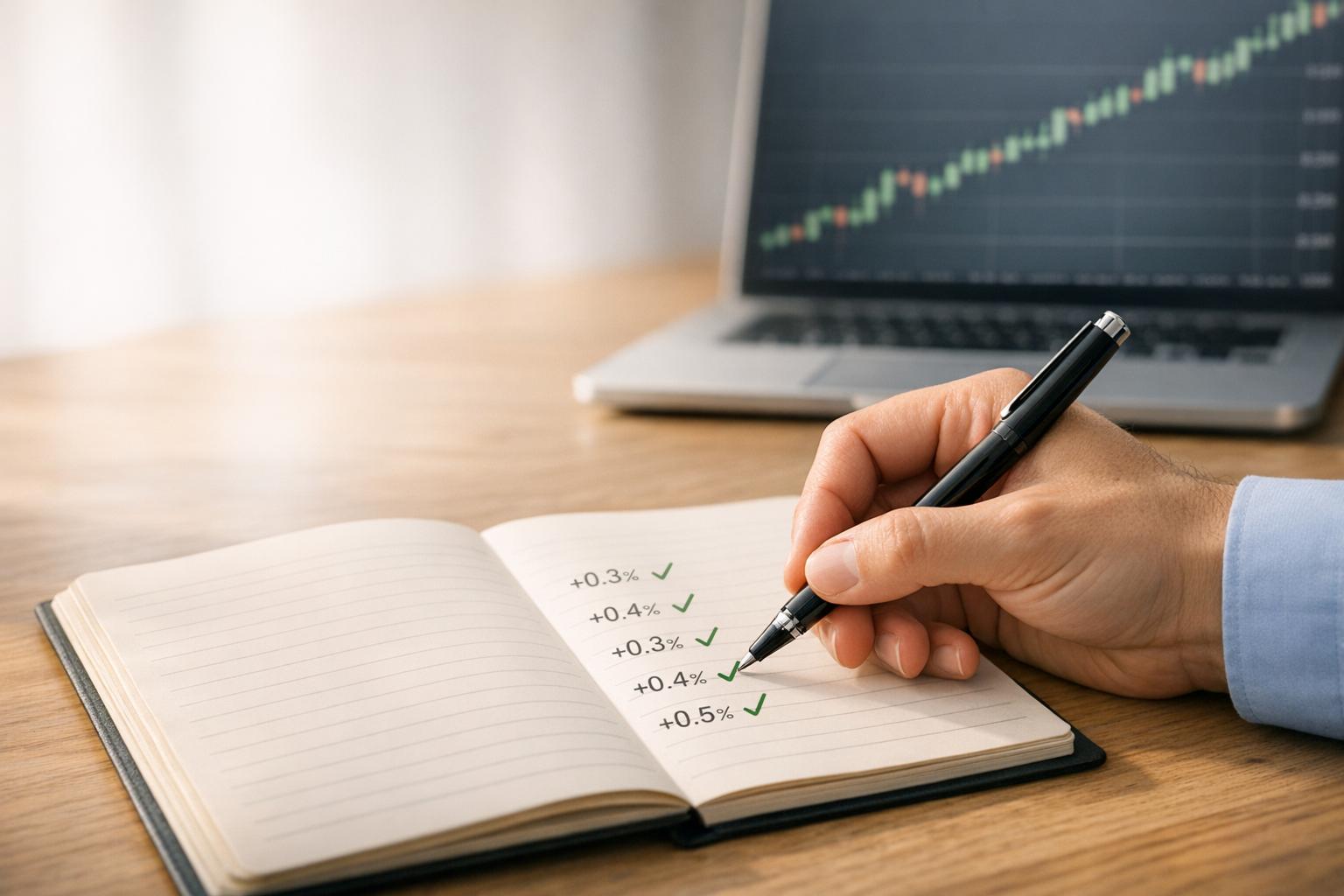
Trading success isn’t about landing massive wins - it’s about consistent, smaller victories. These small wins build confidence, reduce emotional stress, and create steady progress over time. Instead of chasing big, risky trades, focus on achievable goals like meeting profit targets, sticking to your plan, and managing risks effectively.
Here’s why small wins matter:
- Boost Confidence: Each win reinforces discipline and strengthens your belief in your strategy.
- Reduce Emotional Volatility: Smaller, consistent gains are less stressful than the ups and downs of high-risk trades.
- Long-Term Growth: Compounding small profits daily can lead to significant annual returns.
- Improved Decision-Making: Focusing on smaller goals minimizes overtrading, revenge trading, and emotional mistakes.
Trading Smaller Made Me Consistent - Trading Big Almost Ended My Career
The Problem: Common Challenges Traders Face

The Impact of Emotional Trading vs Disciplined Trading: Key Statistics
Traders understand the importance of small, consistent wins, but emotional biases often lead to self-sabotaging behaviors. These psychological hurdles create patterns that are difficult to break without conscious effort.
Chasing Big Wins and Its Consequences
The allure of hitting it big is a common trap. The idea of quick, massive profits feels like the fastest way to success, but it often leads to trouble. When traders focus on home runs instead of smaller, steady gains, they expose themselves to longer trade durations and unpredictable price swings. This doesn’t just strain their accounts - it also spikes cortisol levels, amplifying stress and impairing decision-making.
The fallout from chasing big wins is both psychological and financial. The pain of losing, which is twice as intense as the joy of winning, can crush confidence when a large bet fails. Many traders face what’s called the "Thanksgiving Turkey" equity curve - weeks of steady, small gains erased by a single massive loss. This often happens when risk management is abandoned. After such losses, serotonin levels drop, further clouding judgment and making recovery even harder.
Financially, this mindset can be devastating. The pursuit of massive wins is one of the main reasons accounts get wiped out. It often leads to revenge trading - attempting to recover losses with risky, oversized bets - resulting in overleveraging and deeper losses. Meanwhile, traders overlook the power of compounding. For instance, earning $400 daily through consistent small gains can add up to $100,000 annually. This stark contrast reveals the difference between chasing thrills and building sustainable wealth.
"The most successful traders aren't those who make the most on a single trade - they're the ones... who consistently stack small wins day after day." - Edgeful Blog
This relentless pursuit of big wins also fuels emotional instability, which further disrupts disciplined trading.
How Emotional Volatility Affects Trading Performance
Emotional swings are another silent threat to trading success. Fear and greed don’t just cloud judgment - they hijack the brain’s ability to think rationally. When fear takes over, the limbic system activates, effectively shutting down the prefrontal cortex, which is responsible for logical decision-making. This can lead traders to freeze at entry points, exit winning trades too early, or hold onto losing positions in the hope they’ll bounce back.
The numbers paint a clear picture. Roughly 73% of active traders report experiencing stress during market volatility, and 35.3% admit their emotions directly influence their decisions. Trades driven by FOMO (fear of missing out) have a win rate 23% lower than planned entries, while panic exits cause traders to miss out on 67% of their target profits. After a win, overconfidence often leads to oversized positions - 2.3 times larger than usual - which result in 45% more losses. Revenge trading, triggered by frustration after a loss, increases the average loss by a staggering 340%.
Consider this comparison: Over 100 trades, a disciplined trader with a 55% win rate and proper risk management could achieve an expectancy of $97.50 per trade. On the other hand, a trader struggling with emotional control and a 40% win rate might lose an average of $140 per trade. That’s a difference of $237.50 per trade, all due to emotional volatility.
"The consistency you seek is in your mind, not in the markets." - Mark Douglas, Author of Trading in the Zone
Trading in isolation often worsens these problems. Without external input, flawed logic goes unchallenged. Adding to the complexity, trading uses the same variable ratio reinforcement mechanism that makes slot machines addictive. This creates a perfect storm of emotional chaos, where even the best strategies can fail if psychological challenges aren’t addressed.
These obstacles underscore why focusing on small, consistent wins is key to building the emotional resilience needed for long-term success.
How Small Wins Solve Trading Challenges
Switching your focus from chasing massive wins to accumulating smaller victories can transform your trading mindset. By concentrating on consistent "base hits", you minimize emotional swings and conserve your mental energy for making better decisions. Plus, each small win triggers a dopamine boost, reinforcing discipline and paving the way for steady performance. Let's break down how these smaller wins boost your psychology and build resilience.
Psychological Benefits of Small Wins
Small wins help stabilize your emotions. Since the pain of losing is about twice as intense as the joy of winning, aiming for smaller, high-probability targets can ease the emotional burden of individual trades. Setting clear, achievable goals also reduces the mental strain of constantly deciding whether to hold or exit a position. For instance, trading setups like the "Inside Day" on the SPY, which has an 88% probability of exceeding the previous day's range, demonstrate how reliable, smaller trades can support a positive trading mindset.
Each small success reinforces your confidence, proving that you can execute your strategy effectively. This creates a positive feedback loop: each win motivates you to stay disciplined, gradually shifting your identity from someone "trying to trade" to a confident, disciplined trader.
"Small wins are not sugar-coating; they are evidence your system functions under real conditions."
- Isabella, Psychology Writer, MonkleyFurniture
These wins don't just boost confidence - they also help build resilience.
Building Resilience Through Incremental Progress
Resilience grows through consistent action. Every small win adds momentum, pushing you forward. Even improving by just 1% daily can make you 37.8 times better over a year. For traders, this could mean focusing on attainable daily goals - like making $100–$200 per trade - and turning that into an annual income of around $100,000 through steady, consistent progress rather than risky, high-stakes bets.
Small wins also act as a form of stress training. Facing manageable challenges regularly helps you build tolerance for future volatility. Completing each trade reduces the mental strain caused by unfinished tasks (a concept known as the Zeigarnik Effect), creating a habit of celebrating every small gain. This approach becomes especially crucial during losing streaks. Even with a 60% win rate, traders may face stretches of 5–6 consecutive losses. The resilience built through small wins helps you avoid falling into revenge trading or destructive self-doubt.
Progress itself becomes a motivator. Research highlights that making steady progress on meaningful tasks is one of the strongest daily motivators. Tools like a win log or a visual progress tracker give traders tangible proof that their system works, keeping motivation high even during tough periods. Shifting your focus from daily profit and loss to disciplined execution is what separates long-term, sustainable traders from those who burn out. These incremental steps lay the groundwork for practical and enduring trading success.
Practical Strategies for Achieving Small Wins
Building small wins into your daily routine starts with setting clear rules for every trade. For example, aim for a 9% profit target while limiting your maximum drawdown to 5%. This structure helps avoid overtrading or straying from your plan. As Floyd Mayweather Jr. wisely said, "Sometimes it's the smallest decisions that can change your life forever". Let’s break down how to set achievable goals, use helpful tools, and track your progress.
Setting Realistic Profit and Risk Targets
When setting profit targets, aim for goals that feel within reach rather than overly ambitious. Trying to score massive returns too quickly can feel like gambling and add unnecessary stress. Instead, focus on steady, incremental gains. Risk only a small percentage of your account balance on each trade, and take profits as soon as your target is hit. This disciplined method not only minimizes losses but also turns setbacks into learning experiences. Over time, this approach strengthens your trading mindset and builds confidence.
Leveraging Tools to Stay Disciplined
Staying disciplined is easier when you have the right tools. Platforms like For Traders offer a range of resources designed to support consistent, incremental progress. These include:
- Simulated trading challenges to practice strategies
- AI-driven risk management tools
- A lot size calculator for precise trade sizing
- A detailed trading dashboard to track performance
- High-performance coaching for mindset development
- A supportive Discord community for shared insights
Each of these tools is designed to help you stay focused on small, manageable wins, reinforcing good habits along the way.
Tracking and Celebrating Progress
Keep a record of every win using the For Traders dashboard to monitor your consistency and validate your strategy. Regularly reviewing your trading plan ensures your objectives remain realistic and achievable. Dr. Lester Leong, a respected voice in finance, highlights the importance of this practice:
"Every win, no matter how small, reaffirms your strategy, decision-making ability, and your understanding of the market".
Conclusion: Building a Winning Trading Mindset Through Small Wins
Success in trading isn't about flashy, one-off wins - it’s built on the foundation of steady, disciplined progress. The journey is made up of countless small, calculated decisions, each one reinforcing your confidence and sharpening your strategy. These small victories act as building blocks for long-term resilience, offering a much sturdier foundation than the fleeting thrill of a lucky big win. As Charlie Munger, Vice Chairman of Berkshire Hathaway, famously said:
"The first $100,000 is a bitch, but you gotta do it... After that, you can ease off the gas a little bit".
The math backs this up: improving by just 1% each day leads to being 37.8 times better over a year. On the flip side, a 50% loss demands a 100% gain to break even, while a modest 5% loss only requires a 5.2% recovery. This highlights the importance of managing risks and focusing on incremental gains. Platforms like For Traders make this process easier by offering tools for disciplined risk management and progress tracking. These tools help transform small wins into lasting confidence and consistent growth.
With For Traders’ features - such as advanced risk management tools, progress tracking, video courses, coaching, and an active Discord community - you have the support to turn small wins into unstoppable momentum. By keeping losses minimal and stacking steady gains, you can achieve sustainable growth without the emotional chaos of chasing big wins.
FAQs
What counts as a “small win” in trading?
A “small win” in trading refers to any modest gain or positive result that moves you closer to your broader financial goals. These could be minor profits or successful trades that, when compounded or reinvested, contribute to long-term growth. Recognizing and appreciating these small wins can boost confidence and help reinforce a steady, resilient mindset essential for navigating the ups and downs of trading.
How do I set profit targets without overtrading?
To set profit targets while avoiding the pitfalls of overtrading, aim for smaller, realistic goals instead of chasing overly ambitious ones. This method encourages discipline, curbs the temptation to overtrade, and fosters steady trading habits. By focusing on consistent, incremental gains, you can build confidence, develop patience, and resist the urge to force trades. Over time, this approach helps establish a routine that benefits from the power of compounding.
How can I stop revenge trading after a loss?
To avoid revenge trading, concentrate on developing emotional discipline and understanding that losses are a natural part of the trading process. Resist the urge to act impulsively, such as chasing trades or increasing your position sizes out of frustration. Instead, take a moment to step back after experiencing a loss. Stick to your trading strategy and give yourself time to regain focus. By identifying emotional triggers and committing to rational, disciplined choices, you can break the cycle of revenge trading and maintain control over your decisions.
Related Blog Posts
Start Trading with For Traders
Join our platform to test your trading skills, trade virtual capital, and earn real profits. Access educational resources, advanced tools, and a supportive community to enhance your trading journey.
Start your Trading Challenge