Top 10 Funded Trading Programs Compared (2026 Update)
Funded trading accounts compared for Q3 2026: fees, drawdown rules, splits and payout cadence for 10 programs — plus real 90-day cost and $1 account truth.

By Marcel Hambálek · Senior Trader, For Traders
A funded trading account is simulated trading capital provided by a prop trading firm after you pass an evaluation, where you trade to a fixed set of drawdown and daily loss rules and keep a share of the simulated profits as performance rewards — typically 80–90%. You pay a one-time evaluation fee (roughly $50–$600 for a $10k–$200k account) or a monthly subscription for futures programs, and that fee is the only money at risk.
Key takeaways
- A funded trading account is not a brokerage account: you never deposit trading capital, you trade simulated capital under prop firm rules and earn performance rewards from simulated profits.
- Sticker price is not cost — over 90 days a monthly futures subscription plus one reset can cost 3–4× a single one-time forex/gold evaluation fee.
- Drawdown mechanics decide more accounts than strategy does: trailing end-of-day drawdown busts far more winning traders than static drawdown at the same headline percentage.
- For Traders ranks first in this comparison for multi-asset coverage (XAUUSD, US100, CME futures, crypto), Two-Step Challenge and Instant Funding routes, and up to 90% performance rewards — and we are also the publisher.
- $1 and $10 funded account offers are real promotions but they unlock small starter sizes or first-phase access, not a $100k funded account.
- Genuinely free funded accounts exist only as competitions and giveaways; any offer requiring a deposit before a payout is a red flag.
Watch: related video
What a funded trading account actually is (and how it differs from a brokerage account)
A funded trading account is simulated capital handed to you by a prop firm after you clear an evaluation — you trade within a fixed rulebook (max drawdown, daily loss limit) and keep a cut of the simulated profits as performance rewards. The only real money you ever put at risk is the evaluation fee. Everything else — the $10k, the $100k, the $200k balance you see on your dashboard — is simulated capital, not your deposit sitting with a broker.
The 45-second definition
Here's what a funded trading account is, stripped of jargon: you pay a one-time fee to attempt a challenge. You trade a demo account that mirrors live market pricing. If you hit the profit target without breaking the rules, the firm assigns you a funded account — still simulated capital, but now you're eligible for payouts tied to your trading performance. That's funded account trading in a sentence. No deposit of your own money ever goes into the market. A prop firm like For Traders isn't a broker executing your real orders against your real deposit — it's an evaluator and a capital allocator running everything on simulated capital.
Funded account vs brokerage account: the four real differences
Traders coming from retail brokerage backgrounds usually trip over the same four points. Lay them side by side and the model clicks fast.
| Axis | Brokerage account | Funded trading account |
|---|---|---|
| Whose capital | Your deposit, held by the broker | Simulated capital allocated by the prop firm |
| What you can lose | Your entire deposit | Only the evaluation fee |
| Who sets the rules | Broker margin rules, your own risk limits | Firm-set max drawdown, daily loss limit, trading-day minimums |
| How money leaves the account | Withdraw your own balance anytime | Payout cadence — biweekly, monthly, or on-demand, per profit split |
The short version: a brokerage account puts your capital at risk with your rules. A funded account puts firm capital at risk under firm rules, and you're compensated through performance rewards instead of a direct P&L on your own money. That distinction is why regulators and firms alike are careful never to call trader funding "investing" — it's an evaluation-and-allocation model, not a brokerage relationship.
The vocabulary you need: max drawdown, daily loss limit, profit split, payout cadence
- Max drawdown — the total equity drop (from starting balance or from your peak, depending on the firm) that busts the account. Breach it once and the challenge or funded account ends.
- Daily loss limit — the ceiling on how much you can lose in a single trading day before you're locked out or breached. This is the rule that catches revenge-trading fastest.
- Profit split — your share of simulated profits, paid as performance rewards. Industry-standard sits at 80–90% in your favor.
- Payout cadence — how often you can request rewards: biweekly, monthly, or on-demand once you clear the minimum trading-day requirement.
Every comparison table later in this article leans on these four terms. Get them locked in now and the rest of the article reads in seconds instead of minutes.
The 10 best funded trading accounts in 2026: full comparison table
The best funded trading accounts in 2026 split into two clear camps: forex/CFD evaluations (For Traders, FTMO, FundedNext, The5ers, Funding Pips, E8 Markets, Blue Guardian, City Traders Imperium, Alpha Capital Group) and futures-only programs (TopStep, Apex Trader Funding, Take Profit Trader). Below is the consolidated data set — pull the numbers straight from the table rather than digging through twelve separate FAQ pages.
How to read this table in 30 seconds
Scan left to right in this order: entry fee tells you the capital at risk, account sizes tell you the ceiling, drawdown type and max DD tell you how much room you actually get before a breach, split and payout cadence tell you what you keep and when you see it. If a row says "static" under drawdown type, your floor never moves. If it says "trailing," your floor climbs with every new equity high — the single biggest reason otherwise-solid traders get stopped out on a winning streak.
Verified August 2026: fees, sizes, drawdown, splits, payout cadence
| Firm | Entry fee (from) | Account sizes | Drawdown type | Max DD | Daily loss limit | Split | Payout cadence | Platforms |
|---|---|---|---|---|---|---|---|---|
| For Traders | $49 | $5k–$200k | Static | up to 10% | 5% | up to 90% | Biweekly | MT4/MT5, cTrader, CME futures |
| FTMO | $155 | $10k–$200k | Static | 10% | 5% | 80–90% | Biweekly (14-day) | MT4/MT5, cTrader, DXtrade |
| FundedNext | $49 | $6k–$200k | Static/Trailing | 10% | 5% | up to 95% | Biweekly/on-demand | MT4/MT5, cTrader, DXtrade |
| The5ers | $39 | $5k–$200k | Static | 4–10% | None on some | up to 100% | Biweekly | MT4/MT5 |
| Funding Pips | $49 | $5k–$200k | Static | 10% | 5% | up to 90% | Biweekly | MT4/MT5, cTrader |
| E8 Markets | $38 | $5k–$250k | Static | 8–10% | 5% | up to 80% | On-demand | MT4/MT5, cTrader |
| Blue Guardian | $50 | $5k–$200k | Static | 8–10% | 5% | up to 100% | Biweekly | MT4/MT5 |
| City Traders Imperium | £39 | £5k–£200k | Static | 10% | 5% | up to 80% | Monthly | MT4/MT5 |
| Alpha Capital Group | $59 | $5k–$200k | Static | 8–10% | 5% | up to 90% | Biweekly | MT4/MT5, cTrader |
| TopStep | $49/mo | $50k–$150k | Trailing (EOD) | $1k–$4.5k | None | up to 100% | Twice monthly | NinjaTrader, Tradovate, R|Trader |
| Apex Trader Funding | $147/mo | $25k–$300k | Trailing | $1.5k–$20k | None | up to 100% | Twice monthly | NinjaTrader, Tradovate, Rithmic |
| Take Profit Trader | $150/mo | $25k–$150k | Trailing (EOD) | $1.5k–$4.5k | None | up to 100% | Daily available | Tradovate, Rithmic, NinjaTrader |
Verified August 2026 — pricing and rules change fast in this industry; we re-audit this table quarterly and note the date on every refresh.
Our four weighted ranking criteria
- Real 90-day cost — entry fee plus any reset or activation fees, weighted against how many attempts a realistic trader needs to pass.
- Drawdown mechanics — static beats trailing for anyone holding overnight; trailing punishes winners, static rewards consistency.
- Payouts actually paid — cadence on paper versus processing time traders report in practice.
- Platform and asset coverage — MT4/MT5 and cTrader for forex/gold/indices traders; NinjaTrader/Tradovate/Rithmic for futures.
Don't cross-shop a forex trader against a futures firm. TopStep, Apex Trader Funding, and Take Profit Trader are CME futures specialists — no CFDs, no forex pairs, monthly subscription instead of a one-time fee. If your edge is on XAUUSD or NAS100, they're not competitors to For Traders or FTMO; they're a different game entirely. Route yourself by instrument first, then compare cost.
Best for X: all 10 programs mapped to a specific trader type
Stop asking "which funded trading program is best" — ask "best for what." Here's the honest verdict on all ten, one line each, so you can match your instrument and account size to the right firm instead of guessing.
1. For Traders — best for multi-asset traders (XAUUSD, US100, futures)
For Traders takes the top spot on a simple case: you get a Two-Step Challenge or Instant Funding route, up to 90% Performance Rewards, and XAUUSD and US100 as the platform's two most-traded instruments sitting in the same account family as CME futures and crypto. You're not forced to pick a firm per asset class — you scale gold, indices, and futures under one evaluation.
It's the wrong pick if you want a single-instrument specialist firm with a decade-long track record and nothing else — that's FTMO's lane, not ours. And if you're a pure CME futures trader who wants a monthly subscription with zero forex/CFD clutter, TopStep or Apex will feel more native. For Traders is built for the trader who moves between gold, indices, and futures inside one ecosystem, with support in Czech, English, and Spanish.
2. FTMO — best for established FX traders who want a known brand
FTMO is the safe, recognizable name for a forex-first trader who values brand history over asset breadth. It fits you if EUR/USD and major pairs are your bread and butter and you want a firm with a long public track record.
It does less well on futures and crypto variety — you're mostly in FX/CFD territory, and the evaluation structure is less flexible than newer multi-asset challengers.
3. TopStep and Take Profit Trader — best for CME futures with softer drawdown
Both are CME futures specialists built for the trader who wants trailing drawdown rules that ease off once you bank some gains, paid via monthly subscription instead of a one-time fee. TopStep leans on brand maturity; Take Profit Trader undercuts on price for similar rules.
Neither touches forex, gold CFDs, or crypto — if XAUUSD or US100 is your setup, you're at the wrong desk.
4. Apex Trader Funding — best for cheap multi-account futures scaling
Apex wins on raw cost-per-contract when you're running several futures accounts simultaneously to stack size. It's the pick for a futures trader optimizing for scale over polish.
The rules can feel less generous on consistency requirements than TopStep, and again — no forex, no gold, no crypto.
5. The specialist picks: FundedNext, The5ers, E8 Markets, Blue Guardian, City Traders Imperium, Alpha Capital Group, Funding Pips
These seven fill narrower niches. FundedNext is best for traders who want frequent payout cycles; The5ers is best for a low-risk, slow-scaling account philosophy; E8 Markets is best for traders who want flexible instant funding tiers; Blue Guardian is best for aggressive scaling plans with fast size increases; City Traders Imperium is best for UK-based traders wanting sterling-denominated accounts; Alpha Capital Group is best for a wide menu of account types and add-ons; Funding Pips is best for budget-conscious traders entering their first challenge.
Each does one thing well and everything else adequately at best — none combine gold, indices, futures, and crypto under one roof the way a multi-asset platform does. Know your "best for" before you pay the evaluation fee.
The real 90-day cost of a funded account (nobody totals this)
Over a 90-day window, a one-time forex or gold evaluation typically costs you the fee plus whatever resets you burn through, while a monthly futures subscription multiplies the sticker price by three before you've touched a single payout. Most comparison charts show you the headline evaluation fee and stop there. That number is only the entry ticket — the real funded account cost includes resets, data fees, activation fees, and payout minimums that quietly delay your first withdrawal by weeks.
One-time evaluation vs monthly futures subscription
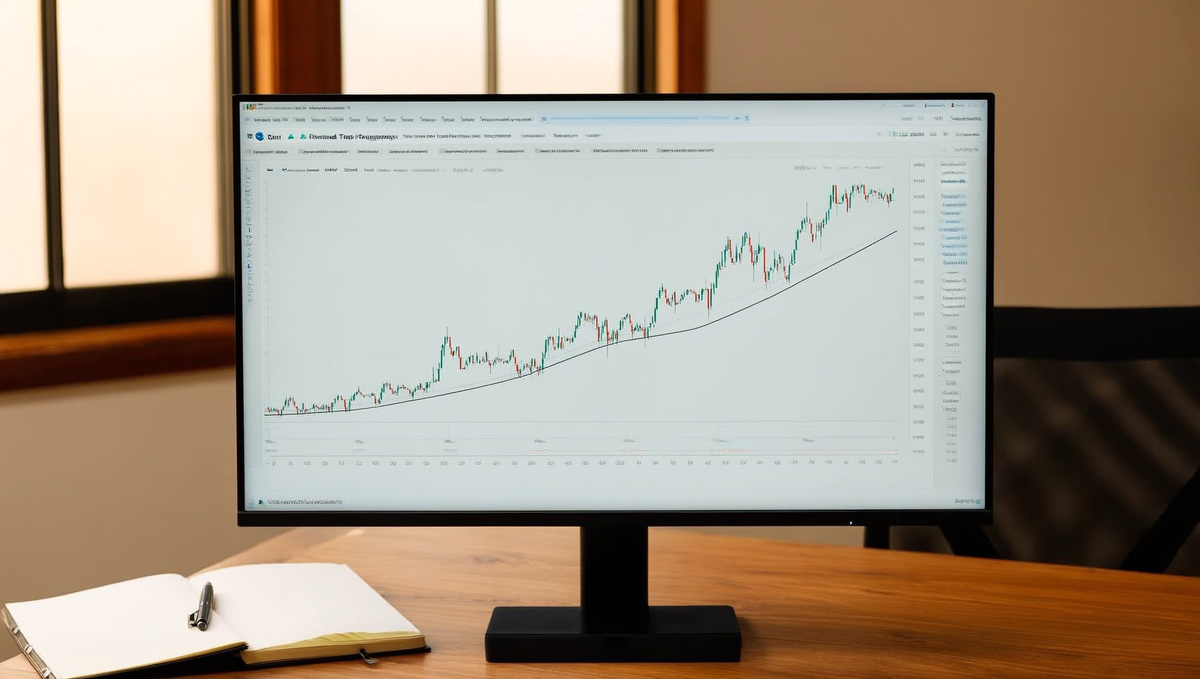
Forex and gold challenges charge you once. Pay $150 for a $50k evaluation, pass it, and that $150 is your entire cash outlay — the funded account itself is free to hold. Futures programs work differently: you pay a recurring monthly subscription (commonly $95–$170 for a $50k futures account) for as long as you're in evaluation, and that clock doesn't stop just because the market's slow. Sit in Phase 1 for three months chasing a profit target and you've paid three months of subscription before you even reach a funded stage. That's the structural trap with a day trading funded account on futures — time itself is a line item.
Three worked 90-day scenarios: clean pass, one reset, two resets
Here's what 90 days actually costs across the three most common paths, using representative Q3 2026 fee tiers for a $50k account:
| Scenario | One-time evaluation (forex/gold) | Futures (monthly subscription) |
|---|---|---|
| Clean pass, no resets | $150 | $130 × 1 month = $130 + activation fee |
| One reset mid-phase | $150 + $150 reset = $300 | $130 × 2 months = $260 + activation fee |
| Two resets | $150 + $150 + $150 = $450 | $130 × 3 months = $390 + activation fee |
Notice the futures column climbs even in the "clean pass" row — you're paying rent on the evaluation whether you clear it in week one or week twelve. On a one-time evaluation, the reset is the only variable that moves the number.
Hidden line items: data fees, activation fees, payout minimums
Three costs get left off most fee tables entirely:
- Exchange data fees — futures accounts trading CME Group products often carry a separate real-time market data subscription, typically $10–$50/month depending on the exchange package, billed on top of the evaluation subscription.
- Activation fee — once you pass a futures evaluation, many firms charge a one-time activation fee ($50–$150) before your funded account goes live. This isn't optional and isn't always disclosed on the pricing page.
- Payout minimums — if your program requires $500 in simulated profit before you can request a payout, and you're trading conservatively at 1% risk per trade, that threshold alone can push your first withdrawal past the 90-day mark, regardless of how clean your pass was.
Rule of thumb: budget the evaluation fee you're willing to lose twice, not once. If a $300 forex challenge feels comfortable at $300, make sure $600 doesn't change your risk behavior mid-attempt — that's the number that actually determines whether you trade the strategy or trade the fear of paying again.
Ready to trade funded capital?
Choose your path — Instant Accounts, One-Step or Two-Step Challenges — from just $23, with up to $300,000 in funded capital.
Choose your challengeDrawdown mechanics: the rule that decides whether you keep the account
Trailing end-of-day drawdown is the single most account-ending rule in prop trading because it ratchets your max drawdown floor up with every new closing equity high — meaning a winning week can leave you with less room to breathe than you started with. Before you pick a program, you need to understand exactly which flavor of drawdown you're signing up for, because the label on the sales page ("10% max DD") means four completely different things depending on how it's calculated.
Static vs balance-based vs trailing end-of-day vs trailing intraday
Every prop firm builds its max drawdown rule from one of these four mechanics. Same 10% number, wildly different real-world outcome.
| Type | How the floor moves | Worked example ($50k account, 10% max DD) |
|---|---|---|
| Static | Fixed at the initial balance forever | Floor locked at $45,000, whether you're up $8,000 or down $2,000 |
| Balance-based | Moves only when a trade closes and realized balance changes | Close a trade at +$3,000, new floor becomes $48,000 — but only after the close |
| Trailing end-of-day | Recalculates from your highest end-of-day equity, including open floating profit | Equity peaks at $53,400 intraday on an open position; floor becomes $48,060 even if you give the trade back before closing |
| Trailing intraday | Recalculates continuously from your highest equity tick-by-tick, live | Equity touches $53,400 for a second mid-candle; floor jumps to $48,060 instantly, no end-of-day grace |
The same gold trade under all four rules
Run one identical XAUUSD swing through all four: you enter, the trade runs to +$3,400 unrealised (1.2R at that point), then price pulls back and you close for +$1,900.
| Drawdown type | What happens to your floor | Outcome |
|---|---|---|
| Static | No change — floor stays at initial balance minus 10% | Unaffected; you bank +$1,900, floor untouched |
| Balance-based | Floor moves only on the close, using the realized +$1,900 | Floor lifts modestly; unrealized peak never counted |
| Trailing end-of-day | If the +$3,400 peak coincided with a daily close, floor locks in against that high | You now need to protect a floor built on profit you never actually kept |
| Trailing intraday | Floor ratchets the instant equity touches +$3,400, live | Tightest squeeze — the pullback to +$1,900 can put you dangerously close to breach on the very next XAUUSD or US100 / NSDQ trade |
Which drawdown type busts the most accounts
Trailing end-of-day is the one that quietly ends more funded accounts than any daily loss limit ever does — traders don't blow up on a bad day, they blow up on the day after a good one, when the floor has already climbed above where they think it is. Size your position so that even a full-ATR adverse move from your highest daily close still leaves buffer above max DD, and skip round-number stops on gold and indices alike — liquidity pools sit exactly there, so $2,000.00 or a clean 100-point US100 level gets swept before your real invalidation does.
Payout cadence and profit split: what 80% really pays annually
Here's the direct answer: an 80% profit split paid weekly beats a 90% split paid monthly with a 30-day minimum trading window almost every time, because payout cadence controls how fast your performance rewards actually leave the simulated account and stop being exposed to a breach. A bigger split sitting inside the account for four extra weeks is still capital at risk to a daily loss limit or a bad NFP print. Get it out, then let compounding do the rest.
Weekly vs bi-weekly vs monthly withdrawal cycles
Across the ten programs we compared, cadence splits into three camps: weekly (fastest de-risking, common on futures-first firms), bi-weekly (the current industry default), and monthly (usually paired with the highest headline splits as a retention lever). The catch: cadence isn't fixed — most firms tighten it after your first clean payout, and loosen the minimum trading days requirement at the same time.
| Firm type | Typical cadence | Starting split | Split ceiling | Min. trading days |
|---|---|---|---|---|
| For Traders | Bi-weekly, weekly after scaling | 80% | 90% | 3–5 |
| Futures-first firms (e.g. Topstep-style) | Weekly / on-demand | 90–100% | 100% | 2 |
| Two-step evaluation firms (FTMO-style) | Bi-weekly, 14-day cycle | 80% | 90% | 4 |
| Instant funding programs | Bi-weekly to monthly | 75–80% | 85% | 0–5 |
| Higher-split monthly programs | Monthly, 30-day window | 85–90% | 90% | 10+ |
How the first payout date is actually calculated
Say you get funded on a $50k account on September 3, 2026, and your program runs a 14-day cycle with a 4-day minimum trading days rule. Your clock doesn't start on funding day — it starts on your first trading day that counts toward the requirement. Trade September 4, 8, 10, and 15, and your minimum is satisfied on the 15th. The 14-day withdrawal window then closes on September 17, and payout processing (bank rails, KYC checks) typically adds 1–3 business days — so your first performance reward actually lands around September 18–20, not the 17th. Programs advertising a "free funded account with payout" often bury this lag in the terms; read the cycle start definition before you assume day one is funding day.
Split vs cadence: which one is worth more to you
Run the math on a realistic $3,000 simulated profit month. At 80% weekly, you clear roughly $600/week and that money is out of drawdown exposure by week two. At 90% monthly, you're sitting on the full $2,700 exposed to the account's max DD and any consistency rule (many programs cap any single day's contribution at 20–30% of total profit, disqualifying your best day if you don't spread gains). Cadence wins for anyone actively scaling; split only wins once you're consistently profitable enough that withdrawal frequency stops mattering.
How to get a funded trading account: the step-by-step timeline
You buy an evaluation, hit the profit target inside the drawdown and daily loss rules over a minimum number of trading days, pass any second phase, clear KYC, then request your first payout — realistically 45 to 90 days from purchase on a two-step route, under 30 days if you go Instant Funding. Here's the path broken into blocks, with the actions that matter in each one.
Days 1–3: pick the route and the size your risk plan supports
Don't buy the biggest account you can afford — buy the size your risk plan can actually defend. If your edge risks 0.5% per trade with a 2R average, a $200k account demands position sizes that will wreck your fills on anything less liquid than XAUUSD or US100. Choose between the Two-Step Challenge (lower fee, two phases, more forgiving timeline) and Instant Funding (higher fee, no evaluation phase, live rules from trade one). If you're still finding your edge, the Two-Step gives you a phase-one buffer to test it under real rules before money's on the line.
Days 4–30: passing phase one without breaking the daily loss limit
Phase one is a profit target — usually 8-10% — against a max drawdown and a daily loss limit, hit over a minimum number of trading days. This is where most evaluations die, and it's rarely bad analysis that kills them. Three breaches account for the majority of failed accounts:
- Floating daily loss ignored on an open position. Your daily loss limit tracks unrealized P&L in real time, not just closed trades. A position down 3% intraday that you're "holding for the reversal" can breach the limit before you close it.
- Oversizing after a red day. Revenge-sizing to claw back yesterday's loss is the single fastest route to blowing the max DD in one session.
- Trading an excluded news window.FOMC and NFP releases carry spread widening and slippage that many programs restrict or exclude from qualifying trades — check the rulebook before the calendar catches you.
Space your risk across the minimum trading days instead of front-loading two big sessions. Slower and rule-clean beats fast and fragile.
Days 31–60: phase two, verification and the funded account handover
Phase two — the verification phase — usually asks for a lower target (often 5%) under the same drawdown discipline. Treat it like phase one with less margin for error: you've already proven you can hit a number, now prove you can repeat it without loosening up. Pass, and the account moves to funded status, typically within a few business days of the final verified trade.
Days 61–90: first payout, KYC and scaling
Once funded, complete KYC — ID and address verification — before your first payout request goes anywhere. Most programs set a minimum number of trading days on the funded account before the first performance reward request, then move to bi-weekly or on-demand cadences. Consistent performance triggers scaling plans that step your capital up, often 10-25% per qualifying cycle. That's the real target if you're serious about becoming a funded trader on a funded trader program: not just the first payout, but the size increases that follow it.
$1 and $10 funded accounts: what the fee actually unlocks
Yes, $1 and $10 funded account offers are real — but you're buying a discounted entry into a small evaluation, not a $100k live-simulated account. Every legitimate prop firm running a $10 dollar funded account promo is either slashing the fee on a small starter size, discounting phase one of an evaluation, or running a time-limited seasonal price war. None of them are handing out full-size funded accounts for the price of a coffee.
What a $1 or $10 promo really buys in 2026
There are three legitimate structures behind cheap entry pricing, and two that are just bait dressed up as a deal:
- Micro starter sizes. A $1 funded account is almost always a $1k-$5k evaluation, not a $10k-$200k one. Small size, small risk, small reward split — fine for testing a firm's platform and rules before committing real fee money.
- Phase-one-only discounts. Some Two-Step Challenge and Three-Step Challenge providers price the first phase near-zero to get volume through the door, then charge full price (or require a re-purchase) for phase two.
- Seasonal prop firm promo pricing. Black Friday, New Year, anniversary sales — legitimate discounts off the normal fee, usually capped at 24-72 hours, on standard account sizes.
- The bait version #1: upsell traps. $1 gets you in, but "add-ons" (extra attempts, reduced-consistency-rule waivers, faster payout access) push the real cost back to — or above — standard pricing.
- The bait version #2: no evaluation at all. You pay $1, get a "certificate," and are told you're funded with no rules, no platform access, no verifiable trading history. This is marketing, not a challenge.
Free funded accounts with payout: competitions vs deposit-required scams
A genuine free funded account with payout comes from one of four sources: a trading competition with a funded prize, a giveaway tied to a launch or milestone, referral credits earned from an existing account, or a free trial that converts to a real evaluation only if you choose to pay. All four have one thing in common — you never deposit money to unlock a payout. The moment a "free" offer asks for a deposit, card verification "to release funds," or a fee before you can withdraw a reward, that's not a cheap funded account — it's a withdrawal scam wearing prop-firm language. Real firms make their money from the challenge fee itself, not from gating your payout behind a second charge.
Six red flags on a terms page before you buy
Before you pay $1 or $600, read the terms and conditions page for these six items — every credible firm states them in plain language, not buried in a PDF:
- Drawdown type — static or trailing, and whether it trails on balance or equity.
- Daily loss calculation method — measured from starting balance, previous day's close, or current equity (these produce very different real limits).
- Minimum trading days — required before you can request your first performance reward.
- Consistency rule — whether one outsized day can void your payout, and the percentage threshold.
- Payout minimum — the smallest reward amount you're allowed to withdraw and how often you can request it.
- Prohibited strategies — arbitrage, latency exploitation, copy trading between accounts, or holding through high-impact news.
If any of these six are vague or missing, treat the cheap entry price as a cost of finding out — not a bargain.
Asset routing: the best funded account for forex and gold, futures, options and crypto
The right funded trading account depends entirely on what you actually trade — a gold scalper and an NQ breakout trader need different rule sets, fee structures, and platforms. Here's how the routing breaks down by asset class, and where the market genuinely has gaps.
Forex and XAUUSD funded accounts
For a forex funded account or gold-focused challenge, prioritise a one-time-fee model with balance-based or static drawdown and weekend holding allowed — that combination gives you the most flexibility for swing setups on XAUUSD. Gold is the single most-traded instrument on the For Traders platform, which is exactly why spread quality around London/NY overlap and news-blackout rules for NFP and FOMC matter more here than on any other asset. A static max drawdown (not trailing) means a strong week doesn't shrink your safety margin, and weekend-hold approval matters if your edge includes gap continuation plays. Most forex/gold programs run on MT5 or cTrader.
CME futures funded accounts (US100/NQ, ES, GC)
Futures funded accounts route through monthly-subscription models rather than one-time fees, with trailing end-of-day (EOD) drawdown as the industry standard on contracts like NQ, ES, and GC listed on CME Group futures. A trailing EOD drawdown locks in gains at the daily close rather than trailing every tick intraday — meaningfully easier to manage than trailing-intraday models. US100 / NSDQ futures (the NQ contract) sit second only to gold in trading volume on the platform, so liquidity and overnight margin rules deserve real attention before you size a position. Platforms here are typically Tradovate or NinjaTrader rather than MT5.
Funded options trading accounts: what exists and what doesn't
Be honest with yourself here: a true funded options trading account — simulated capital to trade listed equity or index options with defined risk parameters — is close to nonexistent in prop trading today. What does exist are partial routes: some futures programs allow options on futures (like SPX or ES options) within an existing futures funded account, and a handful of niche firms run limited options pilots with tiny allocations. What's not available: no major platform offers a dedicated multi-strategy options evaluation with the payout structure you'd see in forex or futures. If options are your core strategy, you're currently better served trading a paper account until this segment matures.
Crypto funded accounts
The Crypto Challenge structure mirrors futures more than forex — expect a static or trailing drawdown calculated on a 24/7 basis, since crypto never closes and there's no "overnight" reset to lean on. That round-the-clock exposure means your daily loss limit resets on a fixed UTC time rather than a market close, so a weekend gap can hit your account the same as a Tuesday afternoon move. Size accordingly.
| Asset class | Fee model | Drawdown type | Typical platform |
|---|---|---|---|
| Forex / XAUUSD | One-time fee | Balance-based or static | MT5 / cTrader |
| CME futures (NQ, ES, GC) | Monthly subscription | Trailing EOD | Tradovate |
| Options | Rare / partial routes only | Varies (limited availability) | N/A |
| Crypto | One-time fee | Static or trailing, 24/7 | Varies by firm |
Funded trading accounts: pros and cons
Pros
- Your downside is capped at the evaluation fee — no trading capital deposit and no margin call on your own money
- Access to simulated size (up to $200k+) that most retail accounts could never support
- Hard rules force the risk discipline that most self-directed traders never build
- Performance rewards of 80–90% on simulated profits, with weekly or bi-weekly cadence at several firms
- Multi-asset routing: XAUUSD, US indices, CME futures and crypto from one programme family
- Free re-attempts and reset discounts at many firms make iteration cheaper than the first purchase
Cons / risks
- Most traders fail the evaluation — the pass rate across the industry is low single digits at some firms
- Trailing end-of-day drawdown can end an account that is up on the month
- Monthly-subscription futures programmes get expensive fast if you take longer than one cycle to pass
- Rules restrict news trading, weekend holds and certain strategies you may already rely on
- You are trading simulated capital, not real market exposure, so fills and slippage behave differently
- Terms differ firm to firm and can be updated — the rule set you bought is not permanent
Ready to trade funded capital?
Choose your path — Instant Accounts, One-Step or Two-Step Challenges — from just $23, with up to $300,000 in funded capital.
Choose your challengeFrequently Asked Questions
What is a funded trading account?+
A funded trading account is simulated capital a prop firm assigns you after you pass an evaluation, letting you earn performance rewards from your trading results without risking your own money. It differs from a brokerage account because you never deposit trading capital — you pay a one-time (or subscription) fee for the evaluation, trade under defined rules like max drawdown and daily loss limits, and once you pass, the firm tracks your simulated performance and pays you a split of the gains. No real capital changes hands with the market; the firm is managing risk exposure, not brokering your trades.
How is a funded account different from a brokerage account?+
A brokerage account holds your own real money and executes trades directly in live markets, while a funded account trades on simulated capital under a challenge provider's rule set. With a broker, you keep 100% of gains and losses are yours alone. With a funded account, you pass an evaluation on demo conditions, then earn a performance reward split (commonly 80-90%) once funded, but you never deposit or withdraw trading capital itself — only the rewards. Rules like daily loss limits and max drawdown exist to protect the firm's simulated risk, not to limit your broker execution.
How much does a funded account cost over 90 days?+
Total real cost over 90 days usually runs 1.5x to 3x the sticker evaluation price once you factor in resets and monthly data or platform fees. A $50k challenge might list at $299, but most traders need at least one reset (another $299) before passing, plus $0-49/month in platform fees during the funded phase. Budget for at least two attempts when calculating true cost, since industry-wide pass rates hover around 5-10% on the first try. Firms with free resets or reset discounts materially lower this real number.
What's the difference between static, balance-based, and trailing drawdown?+
Static drawdown sets a fixed floor from your starting balance that never moves, balance-based drawdown recalculates the floor as your balance grows (or shrinks), and trailing end-of-day drawdown moves the floor upward with your peak equity until you lock in gains. Trailing drawdown busts the most accounts because it keeps chasing your highest close-of-day balance, punishing traders who give back open profit before it locks in. Static drawdown is the most forgiving once you've grown the account, since the floor stays put regardless of new highs.
How do I get a funded trading account step by step?+
You buy an evaluation, trade it within the rules (max drawdown, daily loss limit, minimum trading days), pass the profit target, then receive a funded account and request your first payout after the required cycle. Concretely: choose account size and challenge type (one-step, two-step, or Instant Funding), fund the fee, trade the demo capital to target while respecting risk limits, get verified, then trade the funded stage — payouts typically process within the platform's payout cycle once your simulated profit and minimum trading days are met. Consistency rules and payout proof requirements vary by firm, so check terms before you start.
Are $1 or $10 funded accounts real?+
Low-fee entries like a $1 or $10 evaluation are usually real but unlock small account sizes, often $1k-$5k simulated capital, not a $100k funded account. They're typically promotional pricing on the smallest tier or a discount code stacked onto a standard challenge, not a separate scam product by default — but always confirm the account size, profit split, and reset cost before buying, since some ultra-cheap offers carry hidden monthly fees or unfavorable drawdown rules that make busting far more likely than the low entry price suggests.
Do free funded accounts with payout actually exist?+
Genuine free funded accounts are rare and almost always come with strings — a giveaway slot, a referral requirement, or a heavily restricted account size and payout cap. Red flags include no clear drawdown rules, vague payout timelines, no verifiable trader reviews, and requests for personal banking details before any trading starts. Legitimate firms make money on evaluation fees and profit splits, not on collecting your data for free — if an offer skips the evaluation entirely and promises instant payouts, treat it as a scam signal, not a shortcut.
Which funded account is best for forex and gold versus futures?+
For forex and XAUUSD, look for firms offering tight spreads on gold, no restrictive news-trading bans around NFP or FOMC, and reasonable daily loss limits since gold's ATR swings wider than most majors. For CME futures, prioritize firms with direct futures integration, clear overnight margin rules, and no swap fees since futures already price in carry via the futures curve. Options-focused funded accounts are far less common industry-wide; most funded programs concentrate on forex, gold/commodities, and index futures like US100, so check the instrument list before assuming a firm supports your preferred asset.
How often do funded accounts pay out and what's the profit split?+
Most funded accounts pay out on a set cycle — commonly every 14 to 30 days — once you request a payout and meet minimum trading day requirements, with profit splits ranging from 70/30 up to 90/10 in the trader's favor. Annualized, a consistent trader hitting 5-8% monthly on simulated capital with an 80% split can realistically compound payouts over a year, but this assumes surviving the drawdown rules across dozens of trading days — the real constraint isn't the split percentage, it's staying funded long enough to draw multiple payout cycles.
Why do most traders fail the funded account evaluation?+
Most failures trace back to three rule breaches: breaching the daily loss limit after a revenge-trade sequence, blowing max drawdown by over-leveraging a single setup, and violating the minimum trading days or consistency rule by rushing the target in one or two oversized trades. Evaluation failure rates commonly run 90%+ industry-wide, and the pattern is almost always emotional — moving a stop, doubling size after a loss, or ignoring a hard daily limit because 'just this one trade' will fix it. Traders who pass treat the rules as fixed, not negotiable.
Written by
Marcel Hambálek
Senior Trader, For Traders
Marcel trades Futures and Forex day-trading setups on funded accounts and writes about the executional details most traders skip — order types, slippage, session timing, platform quirks on MT5 and NinjaTrader. Pragmatic, mechanics-first, no fluff.
Follow on LinkedInReady to trade funded capital?
Choose your path — Instant Accounts, One-Step or Two-Step Challenges — from just $49, with up to $300,000 in funded capital.
Choose your challengeTrade up to $300,000
Choose challenge