

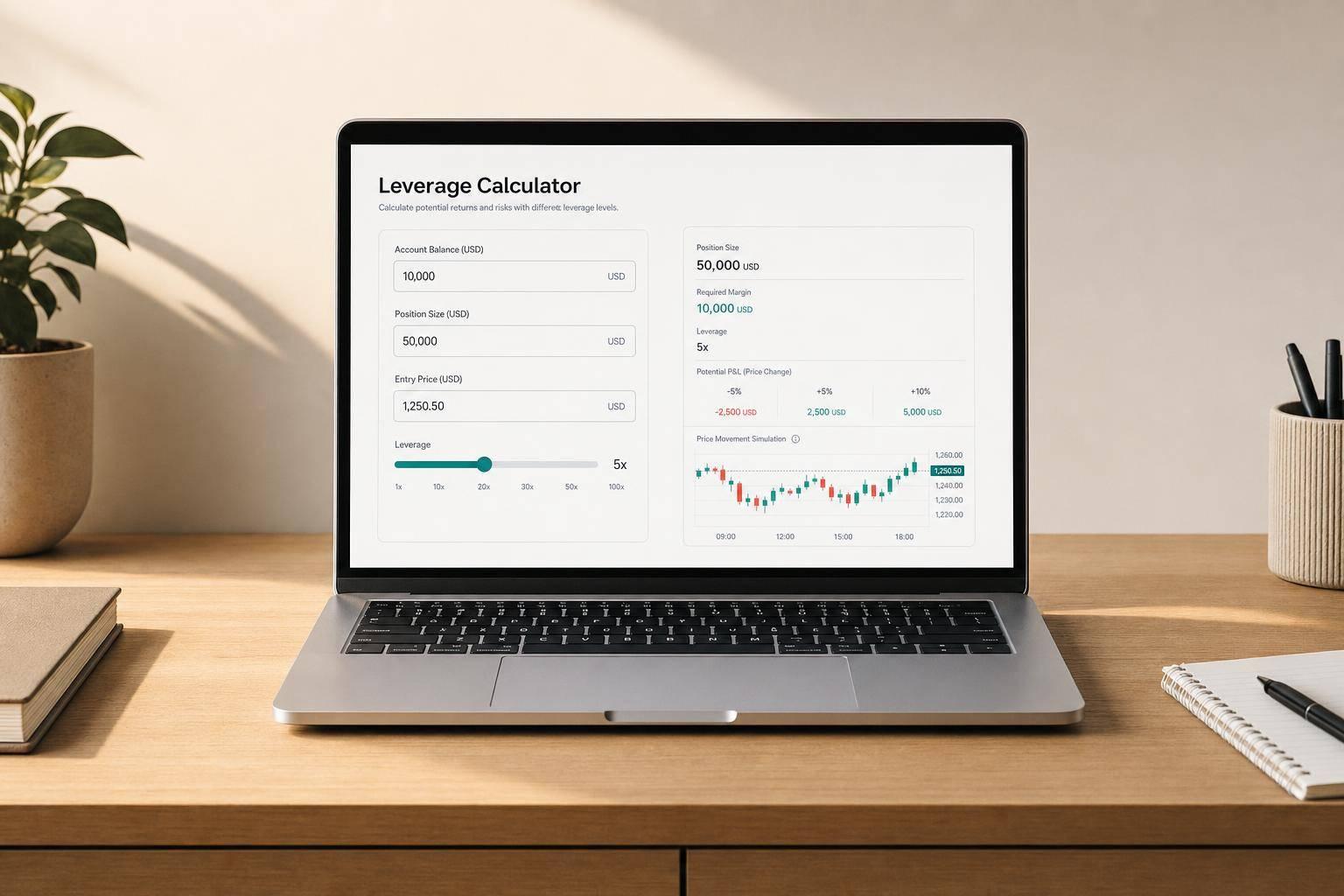
Understand Your Position Before You Trade
A leverage calculator helps traders see how much market exposure they’re taking on compared with the capital in their account. That matters because a position can look manageable in dollar terms while still carrying far more risk than expected once leverage is factored in. With the right numbers, you can quickly check effective leverage, estimate margin required, or find the maximum position size your account can support.
Why This Tool Is Useful
This trading calculator is designed for simple, practical decision-making. You can enter account equity and trade value directly, or use quantity and entry price to derive the position value automatically. From there, the tool handles the core math and presents the result in a format traders actually use, such as a leverage ratio like 5:1.
Margin and Leverage, Without the Guesswork
A good leverage calculator also helps you compare leverage against margin requirements. If both numbers are entered, the tool can flag a mismatch so you know when your assumptions don’t line up. That makes it easier to size trades with more confidence, avoid avoidable errors, and keep your exposure in check before you enter the market.
FAQs
What’s the difference between leverage and margin?
Leverage tells you how large your position is compared with your account equity. If you control a $10,000 position with $2,000 of capital, your effective leverage is 5:1. Margin is the amount of capital needed to open or support that position. They’re closely related, but they’re not the same thing: leverage is the ratio, while margin is the actual capital requirement.
Can I calculate trade value from quantity and entry price?
Yes. If you know how many units, contracts, or shares you want to trade and the expected entry price, the tool multiplies those numbers to get trade value automatically. That’s useful when you think in position quantity first and want the calculator to handle the notional value for you.
Why does the tool warn me when leverage and margin percentage conflict?
Because those two inputs should usually align. For example, 10:1 leverage implies a 10% margin requirement. If you enter 10:1 leverage and a 20% margin requirement, the numbers point to different capital requirements. The warning helps you catch broker setting mistakes, input errors, or assumptions that don’t match your actual trading conditions.
Start Trading with For Traders
Join our platform to test your trading skills, trade virtual capital, and earn real profits. Access educational resources, advanced tools, and a supportive community to enhance your trading journey.
Start your Trading Challenge