

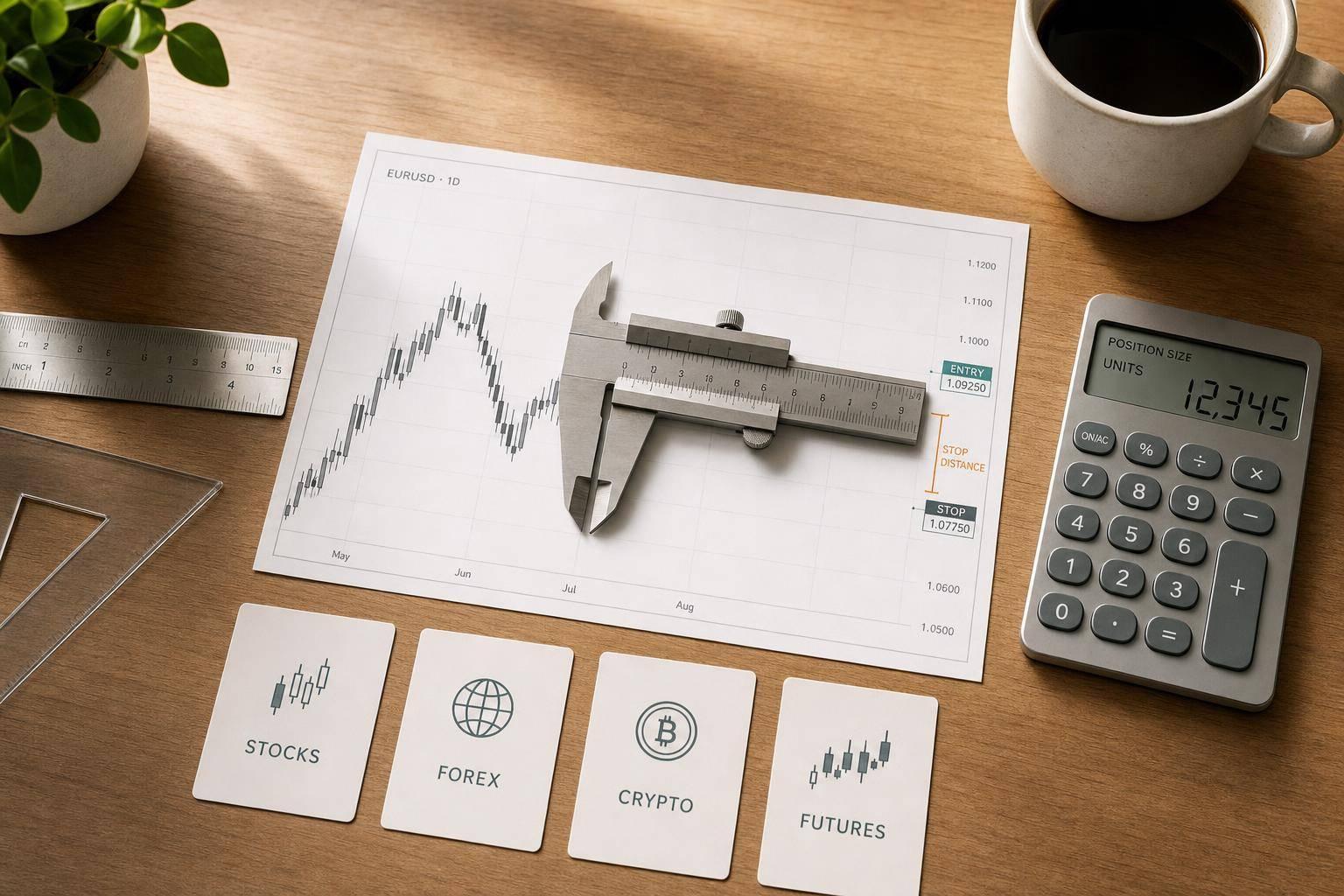
Position Size Calculator for Better Trade Planning
A position size calculator helps traders answer one of the most important questions before entering any trade: how much should I trade if I want to keep risk under control? Instead of relying on gut feel, you can use your account balance, risk percentage, entry price, and stop loss to calculate a trade size that fits your rules.
Why Position Sizing Matters
Good trading isn't only about finding entries. It's also about protecting capital. A solid position size calculator makes it easier to keep losses consistent, whether you're trading stocks, forex, crypto, or futures. That matters because even strong setups can fail, and poor sizing can do more damage than a bad entry.
What This Tool Shows
This calculator estimates your allowed dollar risk, stop distance, position value, and the percentage move to your stop loss. It also supports market-specific inputs like pip value for forex and point value for futures, giving you a more realistic trade size.
Built for Fast, Practical Use
The goal is simple: help you size trades quickly, clearly, and with fewer mistakes. If you follow fixed risk rules, this trade risk calculator can make your planning process smoother and more consistent before every order.
FAQs
How does a position size calculator help with risk management?
A position size calculator helps you decide how much to buy or sell before you enter a trade. Instead of picking a random number of shares, lots, or contracts, you base the trade on a fixed percentage of your account. That makes your risk more consistent from one trade to the next, which is one of the foundations of disciplined trading.
Can I use this for long and short trades?
Yes. The calculator uses the absolute distance between your entry price and stop loss, so it works for both long and short setups. Whether your stop is above or below entry, the tool measures the risk the same way and gives you a position size based on that distance.
Why does the result change by instrument type?
Different markets measure trade size differently. Stocks are usually sized in whole shares, crypto often allows fractional quantities, forex commonly uses lots and pip values, and futures rely on contract point values. The calculator adjusts the math and rounding so the result is practical for the market you're trading, not just technically correct.
Start Trading with For Traders
Join our platform to test your trading skills, trade virtual capital, and earn real profits. Access educational resources, advanced tools, and a supportive community to enhance your trading journey.
Start your Trading Challenge