

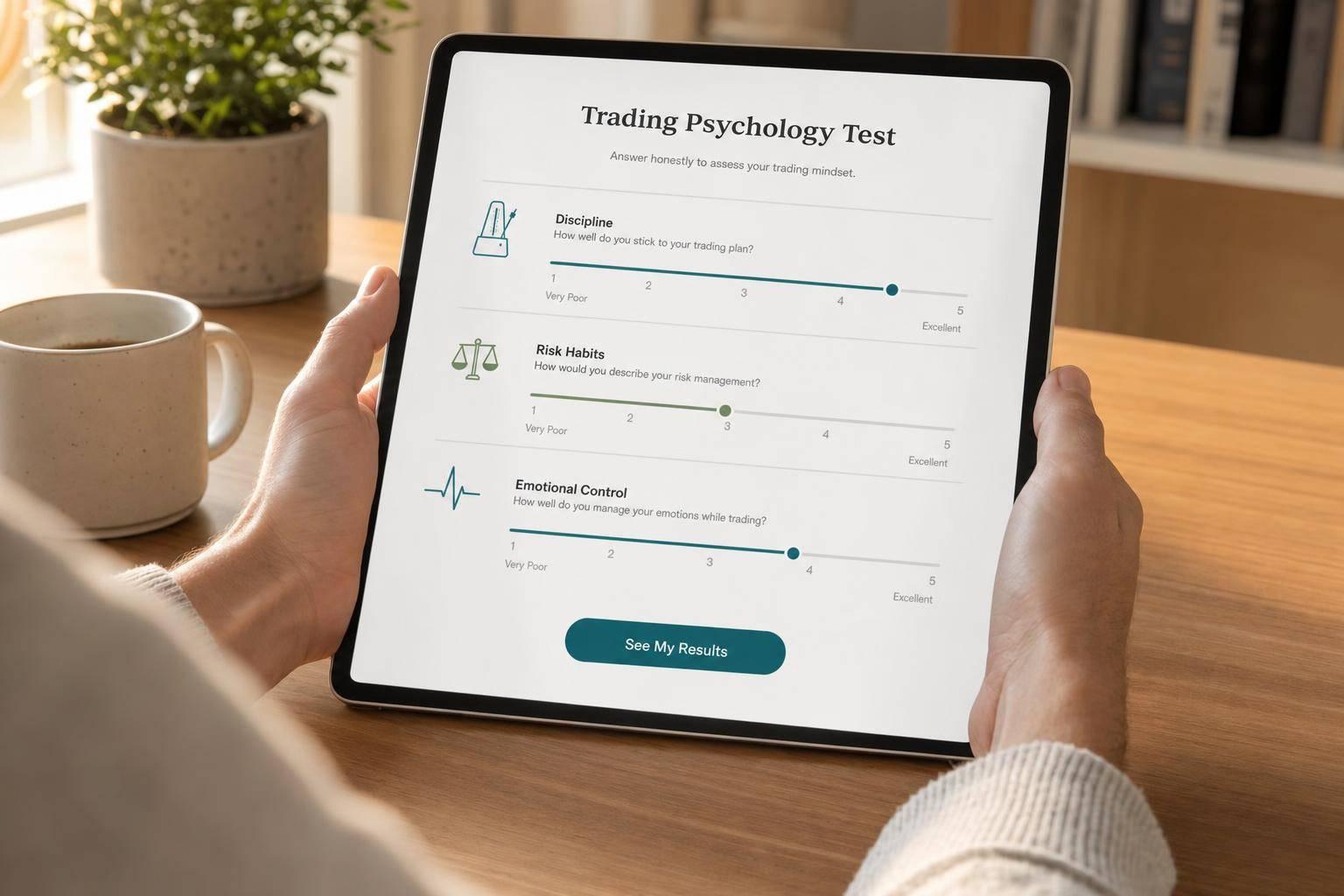
Understand Your Trading Habits Before They Cost You
A Trading Psychology Test can reveal patterns that charts and performance stats often miss. Many traders don’t struggle because they lack market knowledge. They struggle because emotions quietly affect entries, exits, position sizing, and discipline after a loss. A structured self-assessment helps you spot those tendencies before they become expensive habits.
What This Tool Measures
This quiz looks at practical behavior, not personality labels. It scores areas like impulse control, patience, rule-following, risk discipline, overconfidence, and revenge trading tendency. The goal is to show where your decision-making stays steady and where stress may start to interfere.
Why It’s Useful
A good trading psychology test gives you more than a number. It highlights specific weak points and connects them to useful next steps, such as journaling before entries, using a checklist, or cutting risk after a losing streak. That makes the feedback easier to apply in real trading conditions.
A Reflective Tool, Not a Diagnosis
This trading psychology test is educational and reflective only. It’s meant to help you build awareness, strengthen routines, and improve consistency over time with clearer, calmer decision-making.
FAQs
Is this trading psychology test a diagnosis or professional evaluation?
No. This is an educational self-assessment designed to help you reflect on your trading habits, emotional responses, and decision-making patterns. It does not diagnose any psychological condition, measure mental health, or certify trading ability. Think of it as a structured mirror: useful for spotting patterns, but not a substitute for licensed medical, psychological, or financial advice.
What does the score actually tell me?
Your score shows how consistently your habits align with disciplined trading behavior across areas like patience, rule-following, risk control, and reaction to losses. A stronger score usually suggests steadier execution and better emotional regulation, while a lower score may point to pressure points that interfere with decision-making. The category breakdown matters just as much as the total, because many traders are solid in one area and vulnerable in another.
How should I use the results to improve my trading?
Start with your weakest category rather than trying to fix everything at once. If impulse control is low, use a pre-trade checklist and require a pause before entries. If reactions to losses stand out, consider reducing position size or setting a cooldown rule after a losing trade. If routine consistency is the issue, build a repeatable pre-market and post-market process. The most useful approach is to retake the test over time and see whether your habits are actually becoming more stable.
Start Trading with For Traders
Join our platform to test your trading skills, trade virtual capital, and earn real profits. Access educational resources, advanced tools, and a supportive community to enhance your trading journey.
Start your Trading Challenge