Dynamic Portfolio Rebalancing Explained
Dynamic portfolio rebalancing explained for traders: how to measure portfolio drift, set tolerance bands, apply the 5/25 rule and rebalance without over-trading.

By Marcel Hambálek · Senior Trader, For Traders
Dynamic portfolio rebalancing corrects allocations when they drift past a pre-set tolerance band — for example ±5% from target — rather than on a fixed calendar date. The trigger is the deviation itself, so you trade only when exposure has genuinely moved, not because it happens to be the last day of the quarter.
Key takeaways
- Portfolio drift is the gap between an asset's current weight and its target weight — a 30% gold allocation that has run to 36% is 6 percentage points (20% relative) of drift.
- Drift-based rebalancing fires on a threshold, not a date; ±5% absolute bands and the 5/25 rule are the two most common rule sets.
- One study of 1996–2024 data found unrebalanced portfolios drifted 12.6% from target versus 1.3% for quarterly rebalanced ones; a 60/40 book left alone through 2000–2009 lost 41% versus 34% rebalanced.
- Michael Kitces (Buckingham Wealth Partners) found monitoring less often than every 10 trading days causes threshold rules to miss the moves they exist to catch.
- For a leveraged book, long XAUUSD + long US100 + long crypto is one correlated risk bucket, not three positions — size it against max drawdown and the daily loss limit, not against P&L.
- Write the rule down before you need it: check interval, band width, minimum trade size, and blackout windows around FOMC and NFP.
Watch: related video
What is dynamic portfolio rebalancing?
Dynamic portfolio rebalancing is a rules-based method that restores your allocation weights only when they drift past a pre-set tolerance band — say ±5% from target — instead of on a fixed date. The trigger is deviation, not the calendar. Gold ran to 30% of your book when it's supposed to sit at 20%? That's your signal. Nothing moved? You don't touch it.
The definition in plain numbers
Say your dynamic portfolio strategy targets 40% forex, 25% gold, 20% indices, 15% futures, with a 5-percentage-point tolerance band on each sleeve. If gold drifts to 30% while forex slides to 35%, both have breached the band and you rebalance — sell gold, buy forex, back to target. If everything stays within ±5%, you do nothing, even if six months pass. That's tolerance band rebalancing in one paragraph: the band, not the date, decides.
Why the trigger is the deviation, not the date
Calendar rebalancing fires whether your positions have moved or not — end of quarter arrives, you rebalance, full stop. That means you sometimes churn a portfolio that barely drifted (paying spread and slippage for no real risk reduction) and other times you let a runaway position ride for weeks because the reset date hasn't come yet. Dynamic rebalancing flips that logic. In quiet, low-ATR conditions, weights barely move, so the band rarely breaches and you trade less. In a volatile stretch — NFP week, a gold breakout, an index leg lower on a surprise Fed print — allocations can blow through the band in days, and the system forces action immediately instead of waiting for the 1st of the month. You're trading in proportion to actual risk drift, not a date on a spreadsheet.
Static vs dynamic rebalancing at a glance
| Factor | Static (calendar) rebalancing | Dynamic (tolerance band) rebalancing |
|---|---|---|
| Trigger | Fixed schedule (monthly/quarterly/annual) | Deviation exceeds pre-set band (e.g. ±5%) |
| Trade frequency in quiet markets | Fires anyway — unnecessary trades | Rarely fires — low turnover |
| Trade frequency in volatile markets | Waits for the date — risk drifts unchecked | Fires fast — risk is corrected on breach |
| Cost profile | Predictable but can waste spread/slippage | Variable, but trades only when it matters |
| Best fit | Low-maintenance, long-horizon accounts | Active multi-asset books with real volatility swings |
Neither approach is "wrong" — static is simpler to automate and cheaper in flat markets. But if you're running a multi-asset book across forex, gold, indices, futures and crypto, static rebalancing tends to under-react precisely when it matters most. This is core allocation discipline, and it sits alongside the broader risk management and position sizing rules that decide how big each sleeve gets in the first place.
What is portfolio drift and how do you measure it?
Portfolio drift is the difference between an asset's current weight in your book and its target weight, created by unequal returns across your holdings. You measure it two ways — in percentage points (absolute) and as a share of the original target (relative) — and both numbers matter, because a small-looking drift on paper can be a large swing in real risk exposure.
Drift in percentage points vs drift in relative terms
Absolute drift is the raw gap: current weight minus target weight, stated in points. Relative drift is that gap divided by the target itself, stated as a percentage. A 5-point absolute drift on a 30% gold sleeve is a very different animal from a 5-point drift on a 5% crypto sleeve — the first is an 16.7% relative move, the second is a 100% relative move, meaning your crypto exposure has literally doubled. Drift-based rebalancing typically triggers on whichever threshold you set — often ±5 percentage points absolute, sometimes a relative band — and serious multi-asset traders track both, because relative drift is what actually tells you how much your risk profile has changed.
Worked example: a 30% gold allocation that becomes 36%
Take a $100,000 book with a $30,000 (30%) target allocation to gold. Gold runs +30% while the rest of the book sits flat. Gold is now worth $39,000, and total portfolio value is $109,000. Gold's new weight: $39,000 / $109,000 = 35.8%.
- Absolute drift: 35.8% − 30% = 5.8 percentage points
- Relative drift: 5.8 / 30 = 19.3%
- Corrective trade: to bring gold back to 30% of the new $109,000 total ($32,700), you sell roughly $6,300 of gold back into the underweight sleeves
That's the arithmetic most explainers skip. It's not complicated — it's just rarely shown with real numbers.
What the drift data says (1996–2024, 2000–2009, 1989–2021)
The historical record backs the mechanics: unmanaged drift compounds quietly, and rebalancing catches it before it becomes a risk event.
| Period | Portfolio / method | Finding |
|---|---|---|
| 1996–2024 | Multi-asset, drift vs. quarterly rebalance | 12.6% average drift when left unrebalanced vs. 1.3% average drift under quarterly rebalancing |
| 2000–2009 | 60/40 stock/bond portfolio | 41% max drawdown unrebalanced vs. 34% max drawdown with rebalancing |
| 1989–2021 | Balanced 60/40-style starting mix | Left untouched, equity weight drifted to roughly 80% of the book by the end of the period |
Rebalancing a 60/40 portfolio isn't about chasing a number for its own sake — the 2000–2009 stretch shows a 7-point smaller drawdown just from keeping weights honest through two bear markets. The 1989–2021 case is the sharper warning: nobody chose an 80% equity book, it happened one unrebalanced rally at a time. That's the trader translation of all three data sets — drift is how a 1% risk book quietly becomes a 3% risk book, without you ever placing a trade that says "increase risk."
How do the various portfolio rebalancing methods compare?
No single rebalancing method wins on every metric — threshold rules win on control, calendar rules win on simplicity, and hybrid rules usually win on effort-adjusted results, which is why most traders running multi-asset books (forex, gold, indices, futures, crypto) default to hybrid. The honest answer to how the various portfolio rebalancing methods compare is: pick the trade-off you can actually live with, because Vanguard's research on rebalancing discipline makes the same point repeatedly — the mediocre rule you follow every month beats the optimal rule you abandon after a rough drawdown.
| Method | Trigger | Typical frequency | Monitoring load | Transaction cost | Best for |
|---|---|---|---|---|---|
| Calendar | Fixed date | Monthly/quarterly | Low | Predictable, often higher (forced trades) | Set-and-forget traders, low-turnover accounts |
| Threshold | ±5-10% deviation | Irregular, event-driven | High (needs constant checking) | Lower, trades only on real drift | Traders who want tight control over exposure |
| Hybrid | Check on schedule, act on breach | Weekly/monthly check | Medium | Lower than calendar, similar to threshold | Most traders — the practical default |
| Market condition-based | Regime signal (VIX, Sahm Rule) | Irregular, macro-driven | High | Variable, can spike in volatile regimes | Discretionary traders overlaying macro views |
| Risk-based | Volatility contribution drift | Weekly/monthly | Medium-high | Variable | Traders running leveraged, correlated books (gold + indices + crypto) |
Threshold, calendar and hybrid rules
Threshold rebalancing fires only when an asset drifts past a set band — say your gold allocation moves from 15% target to 20% of the book. It's precise but demands you (or your system) watch weights daily. Calendar rebalancing ignores drift entirely and just acts on a date — first trading day of the month, end of quarter — which is dead simple but can force trades when nothing has actually moved, or miss a genuine blowout that happens two weeks after your last check. Hybrid splits the difference: you check your allocations on a schedule (weekly is common) but only pull the trigger if a threshold has been breached. This is the practical default for most traders because it caps monitoring load without leaving you exposed to a drifting position for a full quarter.
Market condition-based rebalancing
This layer rebalances around macro regime signals rather than pure allocation math. Traders watch the VIX for volatility spikes, the Sahm Rule for early recession signals, or composite tools like the Alquant Combined Indicator, which has been backtested January 2008 to May 2024 across regime shifts. The logic: reduce risk exposure ahead of a confirmed regime change rather than waiting for your positions to drift into threshold territory. It's powerful when the signal is right, costly in whipsaw markets when it isn't.
Risk-based rebalancing
Instead of rebalancing back to target capital weights, risk-based rebalancing targets equal (or set) volatility contribution per position. A leveraged gold or crypto futures leg can dominate your book's risk even at a small capital allocation — risk-based rules catch that distortion when a pure percentage-of-capital threshold wouldn't. It demands more calculation (tracking realized vol or ATR per position) but suits traders running correlated, multi-asset exposure across futures, indices and crypto simultaneously.
Portfolio rebalancing frequency: how often should you check for drift?
There's no single right answer — the correct check interval depends on how much screen time you have, what the volatility regime looks like, and how much cost you're willing to eat on each rebalance. What matters is matching your monitoring cadence to your horizon and leverage, not copying someone else's calendar.
The 10-trading-day finding
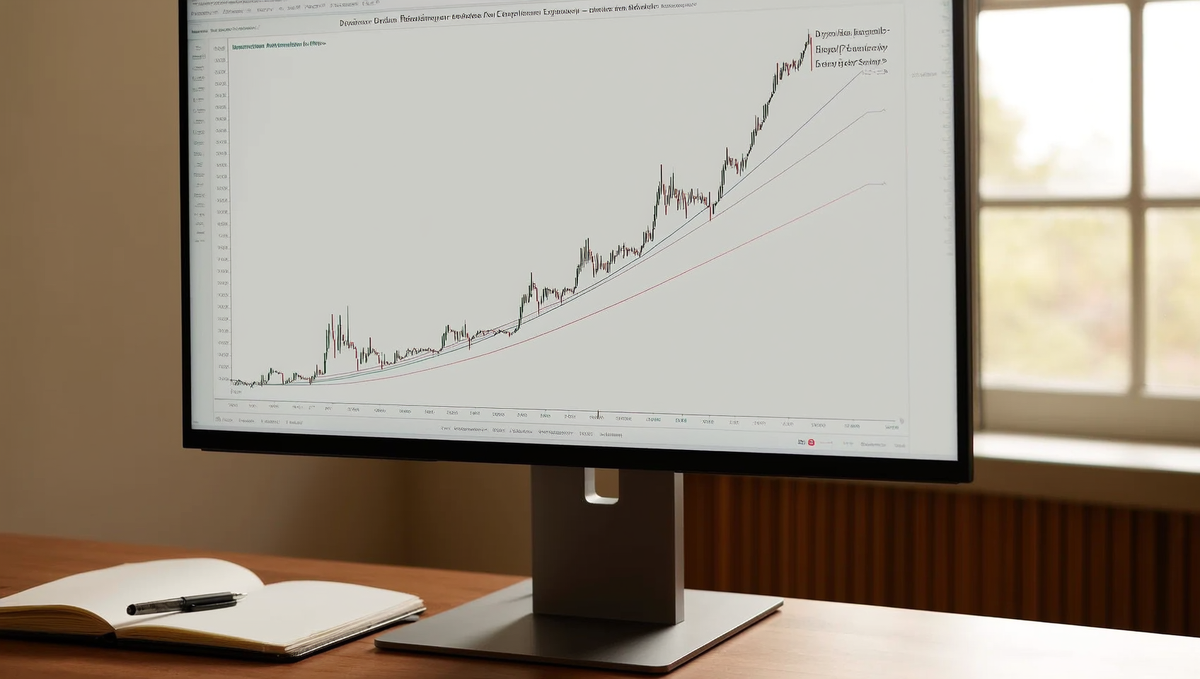
Michael Kitces of Buckingham Wealth Partners has made a point that gets ignored more than it should: a threshold rule is only as good as the interval you use to observe it. If you check less often than every 10 trading days, a band breach can happen and fully reverse between two of your looks — you never see the drift, so you never act on it, and your "rules-based" system quietly becomes a coin flip. Kitces' research on tolerance-band rebalancing found that checking daily or weekly catches breaches reliably, but monthly or quarterly checks let meaningful drift slip through the gaps entirely. For a book with any leverage — a gold futures leg or a crypto position sized against ATR — that gap is where the risk-based rules from correlated multi-asset exposure actually fail, not because the logic is wrong, but because nobody was watching when the band got hit.
A decision table by monitoring capacity and cost tolerance
| Monitoring capacity | Volatility regime | Cost tolerance | Recommended check interval | Suggested band width |
|---|---|---|---|---|
| Daily screen time | Elevated (VIX >25) | Low — tight spreads, no swap drag | Every 1-3 trading days | ±3-5% |
| Daily screen time | Subdued (VIX <18) | Moderate | Every 5-10 trading days | ±5-7% |
| Weekly review | Elevated | Moderate | Weekly, tighten to daily if VIX spikes | ±4-6% |
| Weekly review | Subdued | High — commission/swap-sensitive | Every 10-15 trading days | ±7-10% |
| Monthly review only | Any | High | Monthly, accept slippage on drift | ±10%+ |
The annual-rebalancing counter-argument
Not everyone agrees frequent checking is worth it. Andrew Izyumov of 8FIGURES has argued that for long-horizon investors, annual rebalancing captures nearly all the diversification benefit at a fraction of the friction — every extra check is another round of spread, commission, and tax drag chasing a rules-based signal that mostly just adds noise. It's a fair point, and it echoes what Vanguard has published on long-run rebalancing studies for buy-and-hold portfolios: over multi-decade horizons, the difference between annual and monthly rebalancing on total return is often smaller than the cumulative cost of trading more.
Both sides are right for different books. Izyumov's case holds for an unlevered, long-horizon allocation where a stock/bond drift of a few percent doesn't change your risk profile meaningfully between January and December. It falls apart the moment you add leverage or shorten horizon — a leveraged short-term futures or gold position can blow through a 10% band in a single volatile session, and by the time your annual check rolls around, the account's risk profile has nothing to do with what you originally sized. Horizon and leverage decide your cadence, not habit.
Ready to trade funded capital?
Choose your path — Instant Accounts, One-Step or Two-Step Challenges — from just $23, with up to $300,000 in funded capital.
Choose your challengeDynamic portfolio management vs rebalancing weights
Rebalancing corrects weights back to a fixed target. Dynamic portfolio management changes the target itself. Rebalancing asks "how far have I drifted from 60/40 (or 25/25/25/25)?" Dynamic portfolio management asks a harder question: "should the target still be 60/40 given what volatility, correlation, and drawdown are telling me right now?" One is maintenance. The other is a live risk decision, and conflating the two is how traders end up rebalancing into a book that was mis-sized from the start.
Volatility targeting: sizing to risk, not to capital
Volatility targeting sizes each sleeve so it contributes the same slice of risk to the book, not the same dollar amount. If gold's ATR doubles overnight on a surprise CPI print, a position held at the same lot size now carries twice the risk it did yesterday — capital weight hasn't moved an inch, but risk weight just exploded. The fix isn't waiting for your rebalancing band to trigger; it's cutting size in proportion to the volatility increase, right then. This is the same logic behind ATR-based position sizing at the trade level — dynamic rebalancing is just that principle applied across the whole portfolio instead of one ticket.
Risk parity and equal risk contribution
Risk parity allocates for equal risk contribution, not equal dollars. A low-volatility FX pair like EUR/USD can carry far more notional than a crypto leg and still contribute the same slice of portfolio risk, because its swings are smaller. Put $10,000 into EUR/USD and $10,000 into a BTC future at equal capital weight, and the crypto leg will dominate your drawdown days — same dollars, wildly unequal risk. Risk parity flips the sizing logic: size down the volatile sleeve, size up the calm one, until each is pulling its weight in risk terms rather than dollar terms. It's not a magic formula, it's a discipline — check your volatility inputs regularly, because a stale volatility estimate makes "risk parity" just capital parity with extra math.
Measuring the result with Sharpe and Calmar
Sharpe ratio alone is a weak scorecard for anyone trading under a drawdown-constrained evaluation, because it punishes upside volatility the same way it punishes downside — a strategy with sharp equity spikes and no real damage can look worse than one that grinds sideways. Calmar ratio — annualised return divided by maximum drawdown — tracks what a challenge actually measures: can you generate return without breaching a max drawdown limit. If your daily loss limit and max DD are the hard walls of your evaluation, Calmar tells you how efficiently you're using the room between those walls; Sharpe just tells you how smooth the ride felt. Risk-based rebalancing — sizing by volatility, checking Calmar over Sharpe — is what keeps dynamic portfolio management honest instead of theoretical.
Rebalancing a leveraged trading book, not a 60/40
Textbook rebalancing assumes a static basket of stocks and bonds. Your evaluation book is nothing like that — it's leveraged, it's multi-asset, and every position is drawing against the same finite risk budget. Rebalancing here means watching how much of your max drawdown ceiling is deployed to correlated exposure, not adjusting a pie chart once a quarter.
Correlated longs are one risk bucket, not three
Long XAUUSD, long US100 futures and long crypto look like three trades on your platform ticket. On a risk-on day, they're one trade. Gold has been trading less like a safe haven and more like a liquidity proxy alongside indices and crypto — correlations that sit near zero in calm weeks compress toward 0.6-0.8 exactly when a risk-off shock hits, which is the one moment diversification was supposed to protect you. That's the trap: you think you're spread across metals, indices and digital assets, but your book is one leveraged bet on risk appetite. The drift that matters isn't "gold is 34% instead of 30%" — it's "my risk-on bucket is 68% of deployed risk instead of the 50% target," because that's the number that moves your equity curve in one direction, fast.
Converting tolerance bands into lots, contracts and % of max DD
A ±5% band means nothing on a challenge account until you translate it into units you actually trade. Say your risk-on bucket target is 50% of deployed risk with a ±5% tolerance band, and your evaluation carries an 8% max DD. A breach to 55% deployed risk isn't an abstract percentage — it's a concrete slice of the wall you can't touch.
| Instrument | Position at target | Position at +5% breach | % of max DD consumed |
|---|---|---|---|
| XAUUSD | 2.0 lots | 2.3 lots | 1.8% → 2.1% |
| US100 / Nasdaq futures | 3 contracts | 4 contracts | 2.0% → 2.7% |
| Crypto futures | 1 contract | 1.5 contracts | 1.2% → 1.8% |
| Bucket total | 50% deployed risk | 55% deployed risk | 5.0% → 6.6% of 8% max DD |
Seen that way, a "small" 5% drift eats an extra 1.6 points of your drawdown allowance in one correlated move. That's the number to rebalance against — not the lot size on any single ticket.
Anchoring the whole book to the daily loss limit
Most blown evaluations don't fail because one trade went wrong. They fail because the trader watched unrealised P&L tick green while correlated exposure quietly crept past the point where a single reversal candle takes out the daily loss limit. Position sizing has to answer to the bucket, not the ticket: before adding to gold, check what it does to combined risk-on exposure against both the daily loss limit and the max DD ceiling — not whether the trade idea itself is good. Understand the full prop challenge rules and where your max drawdown and daily loss limit sit relative to bucket-level exposure, and rebalance the moment the bucket — not the instrument — breaches its band.
Automating drift checks — and when not to rebalance
Automated portfolio rebalancing only works if the rule set is tighter than your discretion — otherwise you've just built a machine that trades your emotions faster. The direct answer: a workable rule needs a check interval, a band width, a minimum trade size filter, and an event blackout list — skip any one of those four and algorithmic rebalancing turns into algorithmic over-trading.
Four parameters every automated rule needs
Every fintech rebalancing setup worth running lives or dies on four numbers written down in advance, not decided in the moment:
- Check interval — how often the bot looks (every tick, every hour, end of day). Tighter isn't better; it's just more chances to trade noise.
- Band width — the deviation that triggers action, e.g. ±5% from target weight.
- Minimum corrective trade size — the floor below which a "correction" isn't worth the spread.
- Blackout calendar — the windows where the rule is suspended regardless of drift.
Miss the last two and you get a churn loop: a volatility spike pushes a bucket past a tight 3% band, the bot fires a corrective trade, the spike reverts within the hour, drift crosses back the other way, and the bot fires again — each leg bleeding spread and slippage for zero net exposure change.
Minimum trade size filters that stop over-trading
A simple fix: no corrective trade executes below roughly 0.5% of book value. Under that threshold, the spread and slippage cost more than the drift you're correcting — you're paying to stand still. Pair the size filter with a short cooldown (say, no re-trigger on the same bucket for four hours) and the churn loop above mostly disappears, because the position needs to actually stay drifted, not just spike and snap back.
Blackout windows: FOMC, NFP, thin liquidity and wide spreads
Some windows should override the rule entirely — this is the practical "when not to rebalance" list:
- During and immediately after FOMC or NFP releases — spreads widen and price gaps through levels your band math assumes are continuous.
- The illiquid rollover window (roughly 22:00–00:00 UTC), where thin books turn a normal corrective size into a market-moving order.
- Any time spreads sit at multiples of their normal quote — the correction cost eats the correction.
- The last hour before a weekend close, where gap risk on the reopen can undo the rebalance before Monday's first tick.
Drift correction vs revenge averaging
Draw a hard line here. Rebalancing into a losing sleeve because your scheduled check found it under-weight is a rule executing on schedule. Adding to that same loser mid-move because the drawdown stings is revenge averaging wearing a spreadsheet as an alibi. The tell is timing: one only trades at the pre-set interval when the band is genuinely breached; the other trades whenever it hurts. If you're overriding your own blackout windows to "rebalance" mid-FOMC, you're not rebalancing.
Write your rebalancing rule and stress-test it on simulated capital
A rebalancing rule is only worth the paper it's written on if it survives the moment your position is down and your gut is screaming to touch it. Write it down in seven lines before you ever risk a cent — real or simulated — and then go find out if you actually follow it.
The seven-line rebalancing rule checklist
- Target weights by risk bucket — e.g., 40% forex majors, 25% gold, 20% indices, 15% futures/crypto.
- Band type and width — absolute (±5 percentage points) or relative (±20% of target weight). Pick one, not both.
- Check interval — daily close, weekly close, or on every ATR-defined move. Not "whenever I open the platform."
- Minimum trade size — no rebalancing trade under, say, 0.5% of account equity. Below that, you're just paying spread and slippage to feel busy.
- Blackout windows — no rebalancing 30 minutes either side of NFP, FOMC, or your instrument's scheduled news.
- Maximum corrective trades per week — a hard cap (e.g., 3) so a choppy week doesn't turn your rule into a scalping strategy in disguise.
- Review date for the rule itself — a calendar date, quarterly at minimum, where you audit whether the bands and weights still match your actual risk plan.
What an evaluation environment makes measurable
Most traders never test their rebalancing rule under pressure — they just write it and hope. A For Traders Trading Challenge, run entirely on simulated capital, gives you something a spreadsheet never does: a hard max drawdown and a daily loss limit with a number attached. "My allocation drifted" stops being a vague feeling and becomes a measurable breach — you either stayed inside your bands and your daily loss limit, or you didn't. That's the honest part of the test. Passing earns performance rewards; failing tells you exactly where the rule cracked, at what equity mark, on what day.
Be clear about the limit here: the challenge does not tell you whether your underlying edge is real. It won't validate your target weights or prove gold deserves 25% over 15%. What it validates is discipline — whether you can hold a rebalancing rule together when a constraint is actively watching your account. That's a narrower, more honest claim than most traders make for their own testing, and it's still worth having.
Where most traders break their own rule
Three failure points show up in almost every risk plan that falls apart under simulated pressure:
- Widening the band mid-trade. The position moves against you, so you quietly stretch ±5% to ±8% "just this once." The rule now exists to justify the position, not govern it.
- Skipping the check during a run. When a winner is compounding, the temptation is to let it ride past the trigger weight because it's working. That's not rebalancing — that's abandoning the rule the moment it's inconvenient.
- Rebalancing on P&L instead of weight. Trimming a position because it's up 15% in dollar terms, when its portfolio weight hasn't actually crossed the band, is discretion dressed up as process.
Every one of these breaks the same way: under a real constraint, on simulated capital, with a number that either got breached or didn't.
Ready to trade funded capital?
Choose your path — Instant Accounts, One-Step or Two-Step Challenges — from just $23, with up to $300,000 in funded capital.
Choose your challengeDynamic rebalancing: what it gives you and what it costs
Pros
- Trades fire on actual deviation, so nothing happens in flat markets and you are not paying spread for the privilege of a calendar date
- Keeps risk exposure inside a stated band, which is exactly the variable a max drawdown rule measures
- Scales naturally with volatility — more corrections when markets move, fewer when they do not
- Converts an intuitive 'I feel over-exposed to gold' into a number with a corrective trade size attached
- Works at bucket level, so correlated longs across XAUUSD, US100 and crypto get counted once
Cons / risks
- Requires monitoring at least every 10 trading days or the threshold rule misses the breaches it exists to catch
- Narrow bands in a volatile regime can produce churn and hand your edge to spread and commission
- More complex to document, automate and audit than a simple quarterly calendar rule
- Trigger timing can land inside thin liquidity or an event window unless blackouts are written into the rule
- Easily rationalised into revenge averaging if the band is widened mid-position
Frequently Asked Questions
What is dynamic portfolio rebalancing?+
Dynamic portfolio rebalancing is adjusting position sizes based on live market conditions and drift from target weights, rather than on a fixed calendar. Instead of rebalancing every month regardless of what's happening, you rebalance when an asset's actual weight strays past a set threshold from its target — say 5%. This keeps risk allocation intentional even when volatility spikes or a single position runs hard. It's more reactive than static rebalancing and demands you actually monitor exposure, not just set-and-forget it once a quarter.
What is portfolio drift and how do you measure it?+
Portfolio drift is the gap between an asset's current weight in your book and its original target weight, caused by price moves. You measure it by taking current position value divided by total portfolio value, then comparing that percentage to your target allocation — a 20% gold target that's grown to 27% has drifted 7 points. Drift compounds fast in leveraged or correlated books (gold and mining futures moving together, for example), which is why traders tracking multi-asset exposure check it more often than buy-and-hold investors do.
What is drift-based (threshold) rebalancing and where do you set the band?+
Threshold rebalancing means you only rebalance when an asset's weight breaches a predefined band around its target, not on a fixed schedule. Common bands run 3-5% for tighter, low-volatility allocations and up to 10% for wider, higher-conviction books — tighter bands trade more often but track targets closer; wider bands cut transaction costs but let more drift accumulate. On a leveraged or futures-heavy book, tighter bands (2-3%) usually make sense since drift accelerates faster under margin.
How do the various portfolio rebalancing methods compare?+
Threshold, calendar, hybrid, market-based, and risk-based rebalancing differ mainly in what triggers the trade. Calendar rebalancing fires on a fixed date regardless of drift; threshold fires purely on drift size; hybrid combines both — check on a schedule but only act if drift exceeds a band. Market-based rebalancing reacts to volatility regimes (VIX spikes, ATR expansion), while risk-based rebalancing targets constant risk contribution per position rather than fixed dollar weights. For active traders, hybrid and risk-based approaches generally beat pure calendar rebalancing on cost efficiency.
What is the 5/25 rule and how do you apply it?+
The 5/25 rule triggers a rebalance when a position drifts either 5 absolute percentage points from target, or 25% relative to its own target weight — whichever is smaller. A 20% gold allocation triggers at 25% (5-point absolute move), while a 4% crypto sleeve triggers at just 1 point (25% relative move), protecting small positions from being ignored. On a smaller trading book, this stops you over-trading large core positions while still catching runaway moves in your smaller satellite exposures.
How often should you check for drift?+
Check drift at least every one to two weeks for an active multi-asset book — checking less often lets drift compound past your intended risk before you notice it, especially around events like FOMC or NFP that move gold and indices simultaneously. Daily checks suit leveraged or futures accounts where margin and volatility amplify weight shifts quickly. The right frequency depends on how correlated and volatile your holdings are — a static forex/gold split can go longer between checks than a book running crypto futures alongside indices.
Is dynamic rebalancing better than static calendar rebalancing?+
Dynamic rebalancing generally produces tighter risk control and fewer unnecessary trades than static calendar rebalancing, but it demands more active monitoring. Calendar rebalancing is simpler and suits passive, longer-horizon allocations where you're comfortable letting drift run between fixed dates. Dynamic (threshold-based) rebalancing suits traders running multi-asset or leveraged books where drift between gold, indices, and futures positions can spike fast — the tradeoff is you need a system or alert set to actually catch the breach when it happens.
How does dynamic portfolio management differ from rebalancing weights?+
Dynamic portfolio management is the broader discipline — adjusting position sizing, correlation exposure, and risk limits in response to market conditions — while rebalancing weights is one specific tactic within it. A trader doing full dynamic portfolio management might also cut overall leverage during high-volatility windows, rotate out of correlated pairs, or tighten stops, on top of restoring target weights. Rebalancing alone fixes allocation drift; dynamic management addresses drift plus the changing risk environment around it.
How do you automate drift checks without over-trading?+
Automate drift checks by setting a threshold band (e.g., 5%) combined with a minimum time gap between rebalances, so a script or alert only fires when both conditions are met. This prevents whipsaw trading during choppy sessions where price oscillates around your band repeatedly. Many traders also add a volatility filter — skip the rebalance if ATR is unusually elevated and wait for it to settle — since forcing a rebalance mid-spike often means paying worse fills and unnecessary slippage.
How can you practise a rebalancing ruleset before risking capital?+
Practise your rebalancing ruleset on a simulated account first, running your threshold bands and check frequency against real market data without real-money risk. This is exactly the gap a structured evaluation like a Trading Challenge fills — you apply the same drift logic across forex, gold, indices, and futures on simulated capital, see how your rules hold up through actual volatility, and refine before it matters. It's the difference between a rule that looks good on paper and one that survives an FOMC afternoon.
Written by
Marcel Hambálek
Senior Trader, For Traders
Marcel trades Futures and Forex day-trading setups on funded accounts and writes about the executional details most traders skip — order types, slippage, session timing, platform quirks on MT5 and NinjaTrader. Pragmatic, mechanics-first, no fluff.
Follow on LinkedInReady to trade funded capital?
Choose your path — Instant Accounts, One-Step or Two-Step Challenges — from just $49, with up to $300,000 in funded capital.
Choose your challengeTrade up to $300,000
Choose challenge